
Culture Archive:
American Shame
In: Culture Employment Global Economy Science Source: NYT US Economy
21 Feb 2011How America compares to other industrial countries based on a variety of basic indicators (income inequality, life expectancy, education) as well as some uncommon ones (prison population, level of democracy, and “wellbeing”). Conclusion: America is not #1! Can anyone think of indicators that WOULD make us look good in this crowd?

Middle Eastern Demographics
16 Feb 2011Many middle eastern countries have a large percentage of young people in the population. Compare this to the United States, where it is easier for our politicians to ignore the voice of the young (most of the time).

Combine this with high unemployment, and you’re going to have political problems no matter how autocratic you are:

What Brands are Seared into Your Brain?
In: Culture
11 Feb 2011Rosiesays sent me a timeline mapping out one day of her media exposure. Searching the internets, it turns out that brand mapping was a big meme a few years ago — there’s even an website to help you keep track. I think I deliberately block out most of the advertising I am exposed to, but I’m sure its all swishing around somewhere in my subconscious.
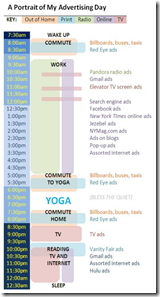

Do you want to see what brands have been successfully seared into our brains? Brand Tags crowd-sourced traditional brand research by asking people to type one word in response to seeing a brand logo, then creating a word cloud based on the results. Here are Costco, Whole Foods, and Cirque du Soleil:



Human Charts
In: Culture Innovative
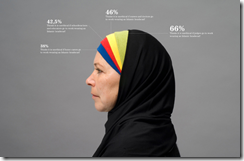
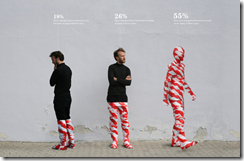
9 Feb 2011Taking a more artistic approach to chart design, artist Peter Ørntoft explored the results of an opinion poll on various Danish social topics with striking photographs. (via)


The Organized Crime Network
7 Feb 2011Just how organized is organized crime? Think of it as the world’s largest and most illicit social network.
Ok, that may not be the best analogy ever, but this interactive map of transnational crime with popup details is a fascinating way to explore the $2 trillion global grey market of illegal activity. (via Ritholtz)


Where the Streets Have Your Name
In: Culture Interactive Maps
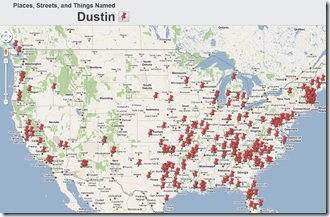
7 Feb 2011Stephen von Worley tracked down streets, places, and things all across the the world that use one of over 10,000 first names. Just enter your name and click on a pushpin to go to that location in either Google Maps or Google Earth. You can even use street view to see the signs and streets themselves. I can’t help but see this leading to a sign-theft crime spree. 😉

Interracial Marriage
In: Culture
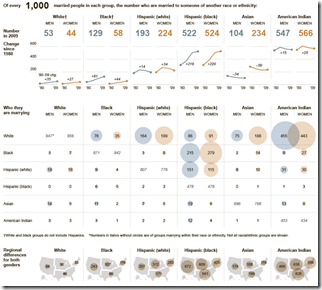
7 Feb 2011A well laid out table from the NYT on who is marrying whom. Using 1000 married people as a base is slightly odd, but you get used to it as you pore over the numbers. Related article. Thanks to Francois Botha for the link!
UFO Sightings
4 Feb 2011Apparently aliens prefer the west coast.
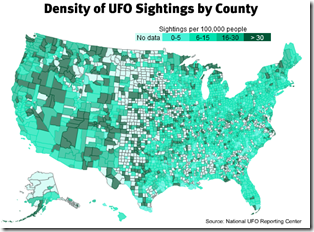
There’s also an interactive version that overlays type of sighting by week onto Google maps.

The World is Getting Fat(ter)
4 Feb 2011Male and female body mass indices by country, from 1980-2008. Some interesting, but perhaps not surprising, observations: European men are consistently fatter than the women, poor people are skinny, and everyone has gotten fatter over the past 18 years. (related article)

Facebook Comment Flowchart
4 Feb 2011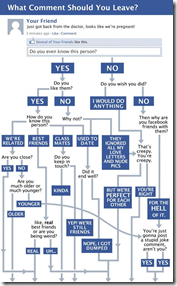
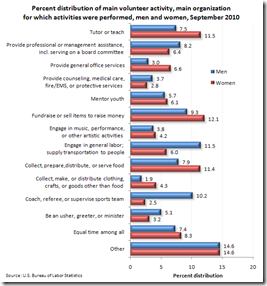
Volunteering in America
In: Culture
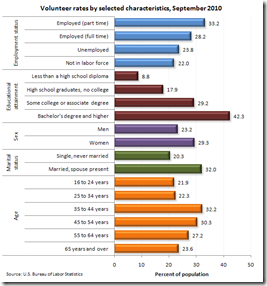
2 Feb 2011Some interesting charts about who volunteered in 2010, and what kind of work they did. (related NYT post)
Crappy Sexist Magazines: Maxim vs Cosmo
In: Culture
25 Jan 2011Darren Barefoot compared the words that appeared on the covers of three years of Maxim magazine to three years of Cosmopolitan. Can you tell which of the below are which?


His post identifies several interesting observations, as do the related comments over at Sociological Images.
For comparison, here is a cloud from Cosmopolitan in the 1970s:

From National Geographic, a wordle type cloud map based on the distribution of common last names.


We Pick Stocks Like We Pick Cute Animals
In: Culture Stock Market
24 Jan 2011Building on my criticism in yesterday’s post, half of the people in this NPR experiment were asked to view three animals and pick the cutest; the other half were asked to pick which one they thought everyone else would think is the cutest. The results are below. The authors point out that this isn’t a new analogy, with Keynes having observed in 1936 that the stock market runs like a beauty contest. It’s an interesting example of how individual preferences can differ so much from social choices.
In the market, Keynes argued, it doesn’t make sense to invest in the company you think is best. It makes sense to invest in the company that you think other people will think is best. Because if everyone else invests in a company, the price of its stock will rise.
Of course, when everyone does this, it leads to a slippery investment world. “We have reached the third degree where we devote our intelligences to anticipating what average opinion expects the average opinion to be,” Keynes wrote.
Pietra Rivoli, a professor at Georgetown’s business school, explains the problem with a market like this: “The key danger is that nobody’s really thinking.”

Profane Twitter
In: Culture Internet/tech Maps
23 Jan 2011Daniel Huffman filtered 1.5 million tweets from March and April 2010 and mapped the rate of profanity across America. (via; note: the link below is to a 12mb pdf file)


What is Chart Porn?
An addictive collection of beautiful charts, graphs, maps, and interactive data visualization toys -- on topics from around the world.
Categories
- Bailout (118)
- Chartporn Related (3)
- Commentary (21)
- Culture (669)
- Emerging Markets (66)
- Employment (245)
- Environment/weather (133)
- Finance (298)
- Food (92)
- Global Economy (373)
- Graphic Design (bad) (26)
- Graphic Design (general) (183)
- Graphic Tools (23)
- History (158)
- Housing (162)
- Humor (204)
- Innovative (183)
- Interactive (545)
- Internet/tech (97)
- Maps (578)
- News Media (34)
- Politics (329)
- Reference (97)
- Science (331)
- Source: Economist (101)
- Source: FT (92)
- Source: NYT (147)
- Source: Ritholtz (76)
- Source: USA Today (27)
- Source: Washington Post (90)
- Source: WSJ (135)
- Sports (58)
- Stock Market (74)
- Uncategorized (2)
- Updated regularly (76)
- US Economy (553)
- Video (22)
- Aram Korevaar: This chart is now being used as a projection in which countries such as China see themselves as in a [...]
- David: Welcome back Chart Porn! [...]
- J S: Thanks for the great story. Miss reading this blog. Hope to see you more active again. [...]
- jake: I lived in a DC row house for 6 years, and I'm writing this comment from my tiny 1 bedroom apartment [...]
- ronny pettersen: Hilarious and unfortunately accurate... ;-) [...]