
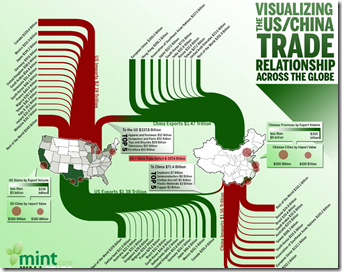
US China Trade
19 May 2009These info graphics are always pretty, but I sometimes wonder if a table isn’t just as good, or better. Perhaps if they added capital flows.
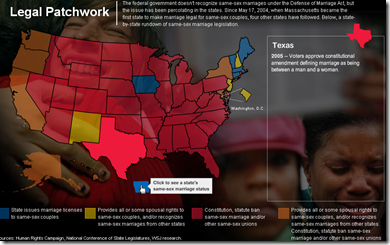
Map Of Same Sex Marriage Laws
19 May 2009Well, they have DC-2009 wrong (isn’t law yet).
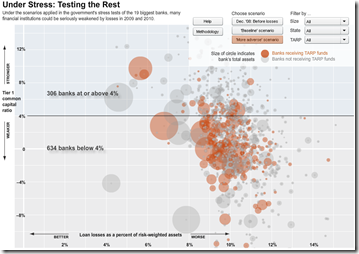
Stressing the Rest
19 May 2009The WSJ stress-tested 900+ smaller banks. Sort by stress scenario, size, state, and tarp-recipients. Related article.
Nickel and Diming Airlines
In: US Economy
17 May 2009In case you are having trouble keeping all the bullshit straight.

a more comprehensive (and likely regularly updated) version is at Kayak.
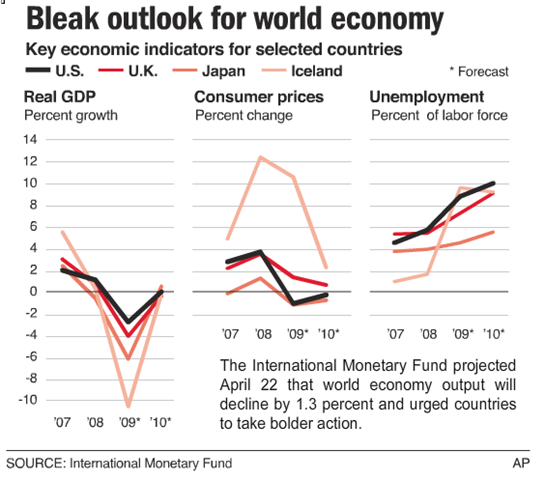
IMF Forecasts
17 May 2009A little old now, but I like this type of multi-indicator chart. The original was part of an AP interactive graphic that included maps.
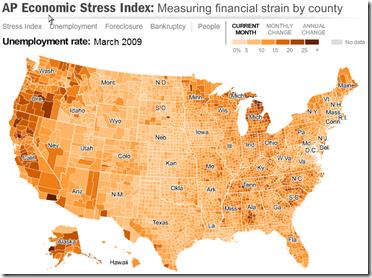
US Economic Stress Index (March 09 data)
17 May 2009More good work from AP. Shows unemployment, foreclosures, bankruptcy, and a composite “stress index”. Double click on a region to zoom in; click&hold to move around.
European GDP Map (Q109)
In: Emerging Markets Global Economy Interactive Maps Source: WSJ
17 May 2009Not much information here – just updated GDP data. Related article.

New York Foreclosures
17 May 2009Very detailed interactive map of NY area foreclosures – over time, zoom in, even just type in an address. Related article. (Hat tip to Ritholtz for the find)

Chart Chooser
15 May 2009Interactive aid for picking the right chart, from Juice Analytics.

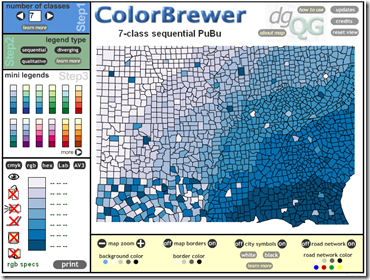
Colors
15 May 2009Picking colors for visualizations is always a tough chore. Cindy Brewer’s ColorBrewer is a helpful tool. Don’t forget to click on the “Learn More” button in each option group to see explanations of categorization and color theory.
European Economic Forecast Map (5/13/09 update)
In: Emerging Markets Global Economy Innovative Maps Source: FT Updated regularly
15 May 2009Click on the timeline at the top to view past versions. Roll over country names to see real GDP growth 2007-10.

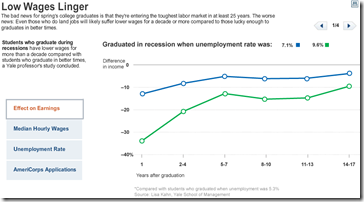
Bad Time to Graduate
15 May 2009“The bad news for spring’s college graduates is that they’re entering the toughest labor market in at least 25 years. The worse news: Even those who do land jobs will likely suffer lower wages for a decade or more.” Related article. Tab through related stats in the below graphic:
Global Breeding Incentives
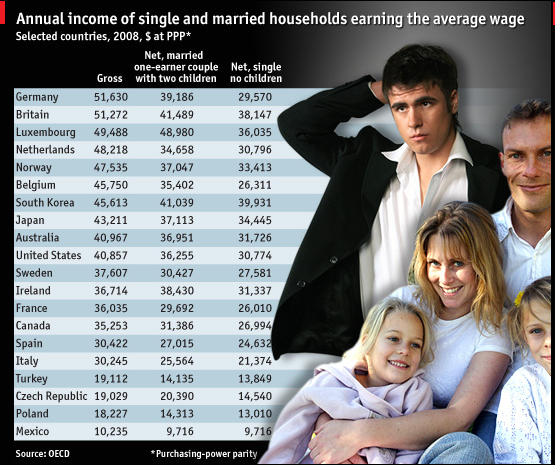
14 May 2009In all but one of 30 OECD countries, a married one-earner couple with two children takes home more money than a single person with no children on the same average annual salary. (from Economist)
Writedown Estimates (again)
In: Bailout Finance Global Economy Interactive Source: FT US Economy
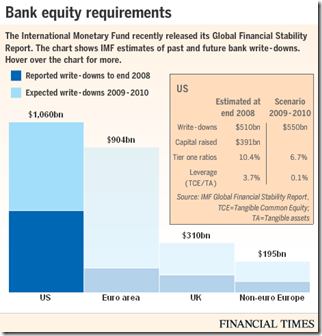
14 May 2009As we noted a couple weeks ago, the IMF released estimates of bank writedowns past and future in this years GFSR. Below is today’s FT interactive graphic of the same info (the total is $4 trillion if you were wondering).


What is Chart Porn?
An addictive collection of beautiful charts, graphs, maps, and interactive data visualization toys -- on topics from around the world.
Categories
- Bailout (118)
- Chartporn Related (3)
- Commentary (21)
- Culture (669)
- Emerging Markets (66)
- Employment (245)
- Environment/weather (133)
- Finance (298)
- Food (92)
- Global Economy (373)
- Graphic Design (bad) (26)
- Graphic Design (general) (183)
- Graphic Tools (23)
- History (158)
- Housing (162)
- Humor (204)
- Innovative (183)
- Interactive (545)
- Internet/tech (97)
- Maps (578)
- News Media (34)
- Politics (329)
- Reference (97)
- Science (331)
- Source: Economist (101)
- Source: FT (92)
- Source: NYT (147)
- Source: Ritholtz (76)
- Source: USA Today (27)
- Source: Washington Post (90)
- Source: WSJ (135)
- Sports (58)
- Stock Market (74)
- Uncategorized (2)
- Updated regularly (76)
- US Economy (553)
- Video (22)
- Aram Korevaar: This chart is now being used as a projection in which countries such as China see themselves as in a [...]
- David: Welcome back Chart Porn! [...]
- J S: Thanks for the great story. Miss reading this blog. Hope to see you more active again. [...]
- jake: I lived in a DC row house for 6 years, and I'm writing this comment from my tiny 1 bedroom apartment [...]
- ronny pettersen: Hilarious and unfortunately accurate... ;-) [...]