
Housing is in Poor Shape
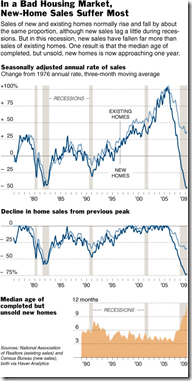
28 Jun 2009Despite what the NARs talking heads spout to the MSM at every data release, housing has not turned a corner. The related article includes a good explanation of what the charts show. For discussion check out Ritholtz’s post on the same article.
Credit Card Hell
28 Jun 2009Anyone else think the recent “reforms” didn’t address the problem of many people’s credit cards, namely the usurious interest rates? Spotted over at Ritzholtz.

Where Are We From?
28 Jun 2009I missed this back in march but just spotted a reference at Infographics. The NYT took 120 years of immigration data and threw it perfectly at a map – you can filter by country of origin, then move through time with the slider.

Who’s Lost
28 Jun 2009I don’t watch the show but if you’re a fan or just plain confused, here’s a well done interactive character org-chart:

Spotted on Infographics.
Best State to Be Unemployed?
26 Jun 2009Map of each States’ unemployment benefits. Related article.

Investment Banking (1st Half 2009 update)
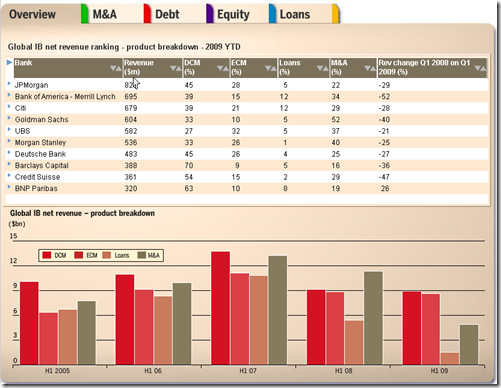
26 Jun 2009The FT has updated its interactive tables of investment banking activity. Lots of good data in here.

He’s Not So Bad
In: Culture Innovative
26 Jun 2009Excellent chart by the NYT plotting Michael Jackson’s top100 hits over the years, and comparing him to other top artists.
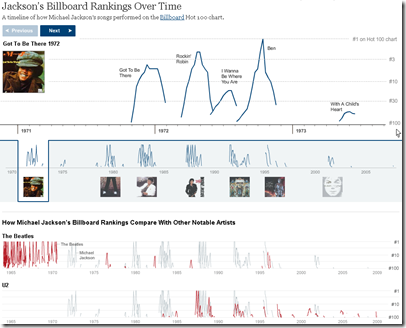
(thanks to FlowingData for spotting it)

Global Boiling
25 Jun 2009Have you taken the time to follow the detailed science behind the global warming debate? Me neither. But I’m starting to read the “Global Climate Change Impacts in the United States” report, which has a number of very effective data visualizations, in addition to laying out all the different climate change arguments. (Thanks to my friend Brad Johnson for pointing out the report.)


World Drug Report
25 Jun 2009Below is a chart from the UNODC’s 2009 World Drug Report. I focus a lot on media sources and blogs, but a lot of great information visualization is being done by NGOs/thinks tanks/etc.


House-Like Self-Diagnosis
24 Jun 2009WSJ article on visible symptoms of many diseases. The accompanying graphic is aesthetically pleasing, but a little disappointing info wise.

50 Great Examples of Data Visualization
In: Innovative
23 Jun 2009Check out the list at WebdesignerDepot.com. (Thanks to Matthieu Cormier for the link)

and while we’re at it: 25+ Useful Infographics for Web Designers from the same blog. my two favorites below.
Different types of internet participants by age group:

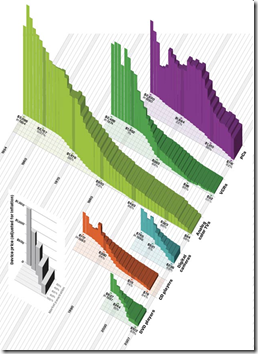
Changing costs of living on the bleeding edge of technology:
Financial Reform
In: Finance Global Economy Source: FT Source: NYT Source: Ritholtz Stock Market US Economy
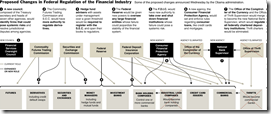
23 Jun 2009Summary of EU and US reforms. The related article is a very good read on the subject.

NYT’s version of just the USA (hat-tip to Ritholtz). Related article.
The State of Britain
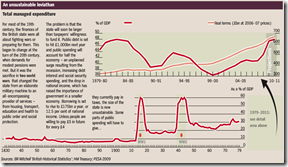
23 Jun 2009A series of six figures (two shown below) on the composition of British Government Expenditure.



What is Chart Porn?
An addictive collection of beautiful charts, graphs, maps, and interactive data visualization toys -- on topics from around the world.
Categories
- Bailout (118)
- Chartporn Related (3)
- Commentary (21)
- Culture (669)
- Emerging Markets (66)
- Employment (245)
- Environment/weather (133)
- Finance (298)
- Food (92)
- Global Economy (373)
- Graphic Design (bad) (26)
- Graphic Design (general) (183)
- Graphic Tools (23)
- History (158)
- Housing (162)
- Humor (204)
- Innovative (183)
- Interactive (545)
- Internet/tech (97)
- Maps (578)
- News Media (34)
- Politics (329)
- Reference (97)
- Science (331)
- Source: Economist (101)
- Source: FT (92)
- Source: NYT (147)
- Source: Ritholtz (76)
- Source: USA Today (27)
- Source: Washington Post (90)
- Source: WSJ (135)
- Sports (58)
- Stock Market (74)
- Uncategorized (2)
- Updated regularly (76)
- US Economy (553)
- Video (22)
- Aram Korevaar: This chart is now being used as a projection in which countries such as China see themselves as in a [...]
- David: Welcome back Chart Porn! [...]
- J S: Thanks for the great story. Miss reading this blog. Hope to see you more active again. [...]
- jake: I lived in a DC row house for 6 years, and I'm writing this comment from my tiny 1 bedroom apartment [...]
- ronny pettersen: Hilarious and unfortunately accurate... ;-) [...]