
Now I Know
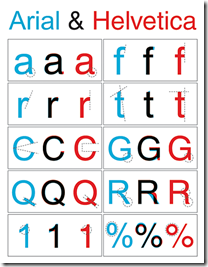
23 Sep 2009The differences between Arial and Helvetica fonts. (source)
Poor Header
In: News Media
23 Sep 2009The newspaper doesn’t always do that great a job of interpreting statistics. It appears someone in the graphics department forgot that the 2009 number was only for part of the event (or thought the footnote was sufficient). To be fair, according to this article, attendance was indeed up this year.

Gadget Impact
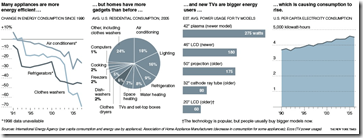
22 Sep 2009While toys and appliances are getting more efficient – we are using more of them. Related NYT article. Again, hat tip to the keen eye of Paul Kedrosky.
Google News Timeline
22 Sep 2009Browse visually through the news of time period (month, day, year) Click on “add more queries” to control the content sources displayed. Filter by date, or do a search. Unfortunately only goes back to 2005.

Branding
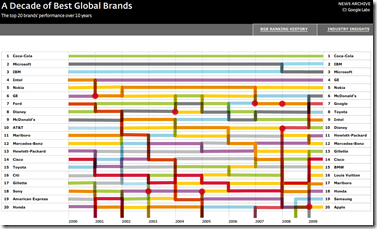
22 Sep 2009A comparison of how brands are ranked over time. I’d question the methodology and meaning of these surveys, but the graphic is well designed and curiously interesting to play with. Spotted at Infectious Greed.
Fun With [Banking] Data
In: Employment Finance Graphic Design (general) Reference US Economy
22 Sep 2009The St. Louis Federal Reserve has an excellent graphing tool called Fred Graph. You can view a variety of economic (not just banking) data over any time period, add/delete series at will, and download the raw data. Below is an example of commercial, consumer, and real estate loans (1940-today); and the same data zoomed in on 2007-today (note the total absence of increased lending). To start, pick a data series from the Fred Page then click on the graph itself to bring up more design options.


Bailout Update
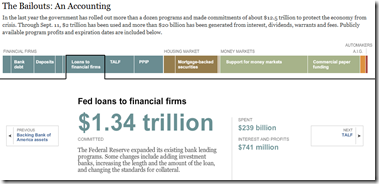
22 Sep 2009From the NYT, a presentation of all of the bailout programs. Updated through September 11.
Bailout Matrices
21 Sep 2009I question the value of “Bold/Weak” as an axis. but it’s still interesting to look at. Related CNNMoney article.

More interesting: Change in stock price one year later, versus level of federal assistance:

Art vs Graphic Design
21 Sep 2009A great article over at webdesigndepot about the difference between art and design. I don’t agree with all the distinctions he makes, but it’s an interesting read.

Brookings Metro Monitor (Sept 09 report)
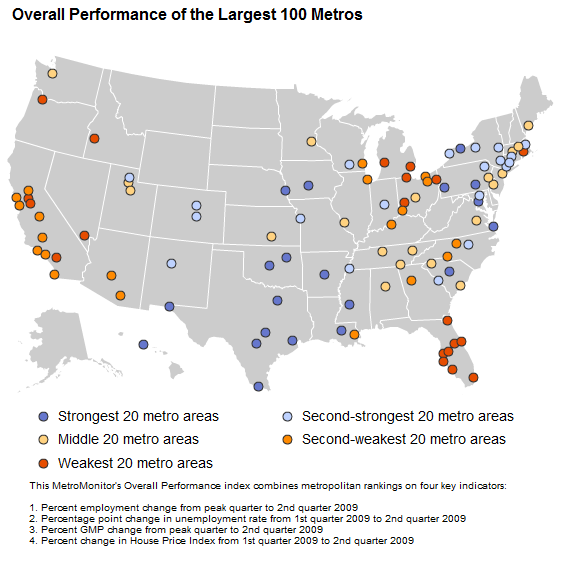
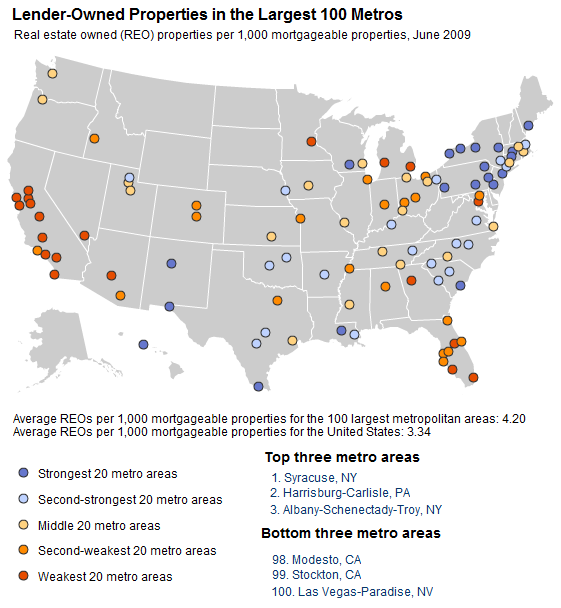
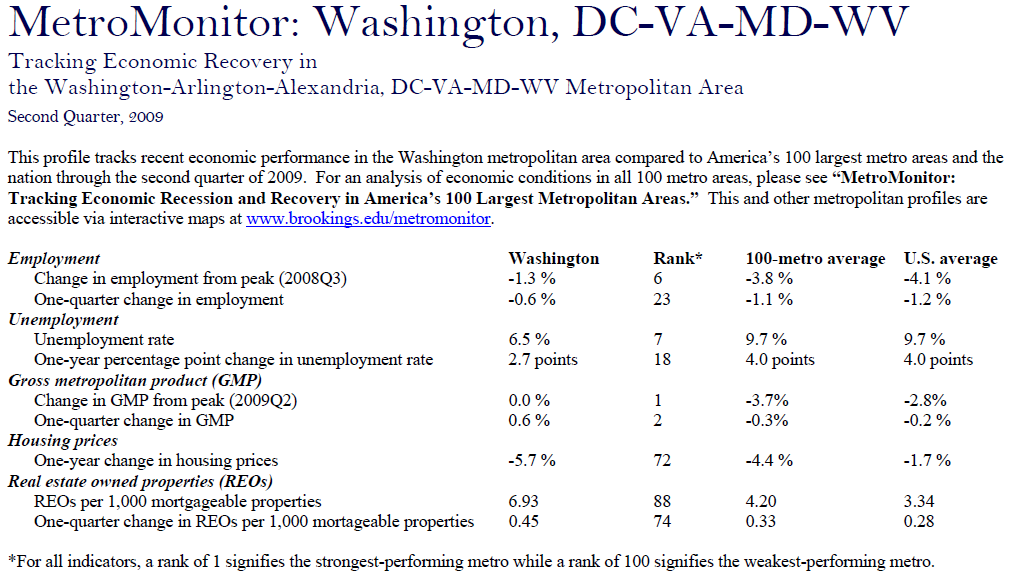
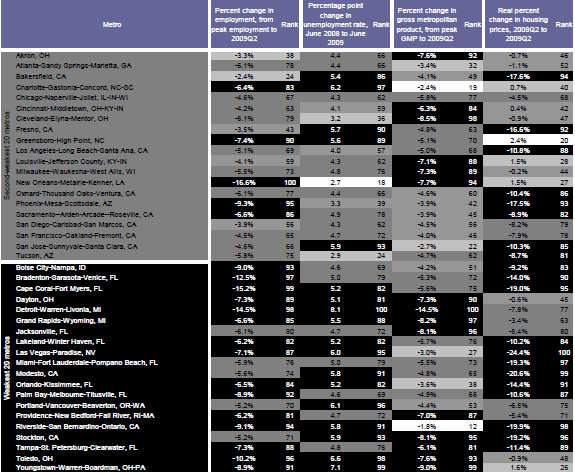
21 Sep 2009Brookings is tracking the economic health of 100 USA metro areas using a variety of indicators. Below are the maps for overall performance and REOs (there are more on the site). You can look up summary reports for individual cities. Also interesting are the rankings, which appear in the appendix of the full report.
FDI Continues to Fall
In: Emerging Markets Finance Global Economy Source: Economist
21 Sep 2009
Not News to Anyone…
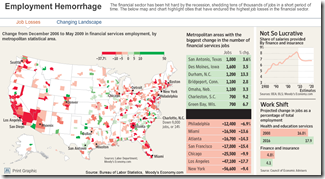
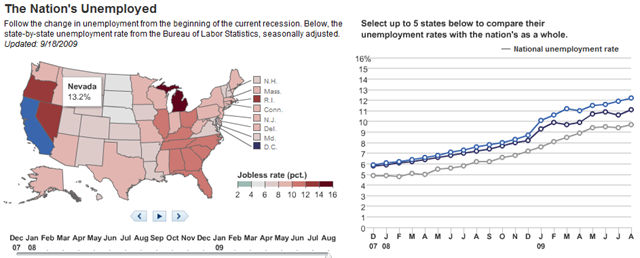
21 Sep 2009Two employment graphics from the WSJ:
Financial sector job losses (more spread out than I would have suspected). Related article.
State-by-State, with a timeline slider Dec 07 through August.
G20 Pittsburgh
21 Sep 2009Interactive tool for grasping what the G20 has said, and done, over the last three summits.
In depth G20 coverage from the FT is available here.

Related article. Once again, spotted over at Infectious Greed (I really should go there more often).
Company Political Contributions
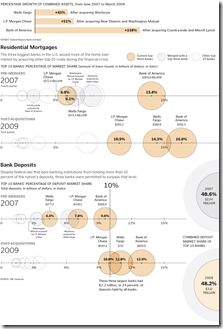
18 Sep 2009Click on a logo to sort all companies in that sector by party contributions, then click again for pop-up details. I love this both because I like the object oriented use of the logos, and the data results are very interesting to browse this way.


What is Chart Porn?
An addictive collection of beautiful charts, graphs, maps, and interactive data visualization toys -- on topics from around the world.
Categories
- Bailout (118)
- Chartporn Related (3)
- Commentary (21)
- Culture (669)
- Emerging Markets (66)
- Employment (245)
- Environment/weather (133)
- Finance (298)
- Food (92)
- Global Economy (373)
- Graphic Design (bad) (26)
- Graphic Design (general) (183)
- Graphic Tools (23)
- History (158)
- Housing (162)
- Humor (204)
- Innovative (183)
- Interactive (545)
- Internet/tech (97)
- Maps (578)
- News Media (34)
- Politics (329)
- Reference (97)
- Science (331)
- Source: Economist (101)
- Source: FT (92)
- Source: NYT (147)
- Source: Ritholtz (76)
- Source: USA Today (27)
- Source: Washington Post (90)
- Source: WSJ (135)
- Sports (58)
- Stock Market (74)
- Uncategorized (2)
- Updated regularly (76)
- US Economy (553)
- Video (22)
- Aram Korevaar: This chart is now being used as a projection in which countries such as China see themselves as in a [...]
- David: Welcome back Chart Porn! [...]
- J S: Thanks for the great story. Miss reading this blog. Hope to see you more active again. [...]
- jake: I lived in a DC row house for 6 years, and I'm writing this comment from my tiny 1 bedroom apartment [...]
- ronny pettersen: Hilarious and unfortunately accurate... ;-) [...]