
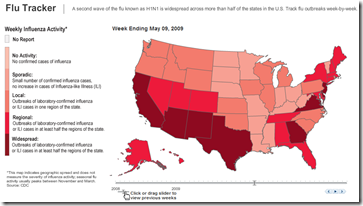
Flu Tracker
In: Maps Science Source: WSJ
8 Oct 2009There are a lot of these maps out there. This one is interesting because the historical week-by-week animation illustrates the seasonality of the outbreak.
Atheism on the Rise
In: Culture
7 Oct 2009Another example of the data being hidden by poor design. Can you read the charts? Can you even find them? It took me a minute of scrolling around to locate the atheism chart.

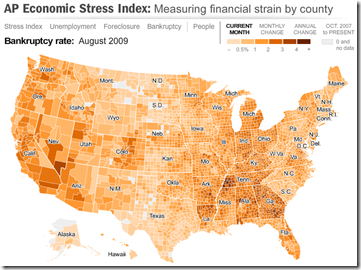
The well designed map displays unemployment, foreclosures, bankruptcy, or a composite “stress index”, by county. In the upper right you can change the period the %-change is calculated for (try it, it’s pretty nifty). To look at data over time, click on the “Oct.2007 to present” option and a historical slider will appear at the bottom (very slick to play with). Double click on a region to zoom in; click & hold to move around.
Instrumental Range
6 Oct 2009A wonderful interactive chart showing the frequency range of various musical instruments and how they correspond to human hearing.


GDP per Capita
6 Oct 2009Nothing all that new data-wise, but what’s interesting is the tool and the odd list of groups that the tool uses as filters, including “primarily muslim”, “smallest area”, “Horn of Africa” and others.

Bad Economists!
In: Global Economy
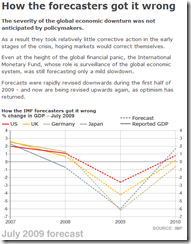
5 Oct 2009A month old now (new IMF data is now available), but this slideshow of charts from the BBC shows the changing GDP predictions over the course of the crisis.
Follow the Money
5 Oct 2009
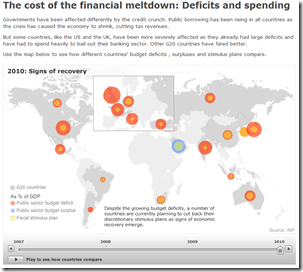
G20 Financial Support
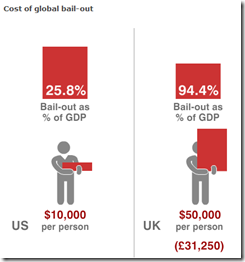
5 Oct 2009It’s unclear what the vintage of the data is, but the below map shows G20 crisis spending. Thanks to Silona for the heads up.
Investment Banking (updated)
In: Bailout Finance Source: FT
5 Oct 2009Global banking statistics, through Q309.

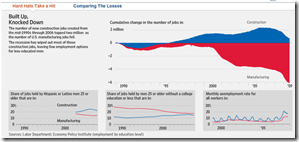
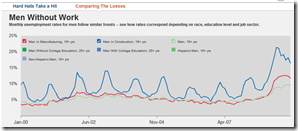
Historical Unemployment (updated)
5 Oct 2009Updated Oct. 09.

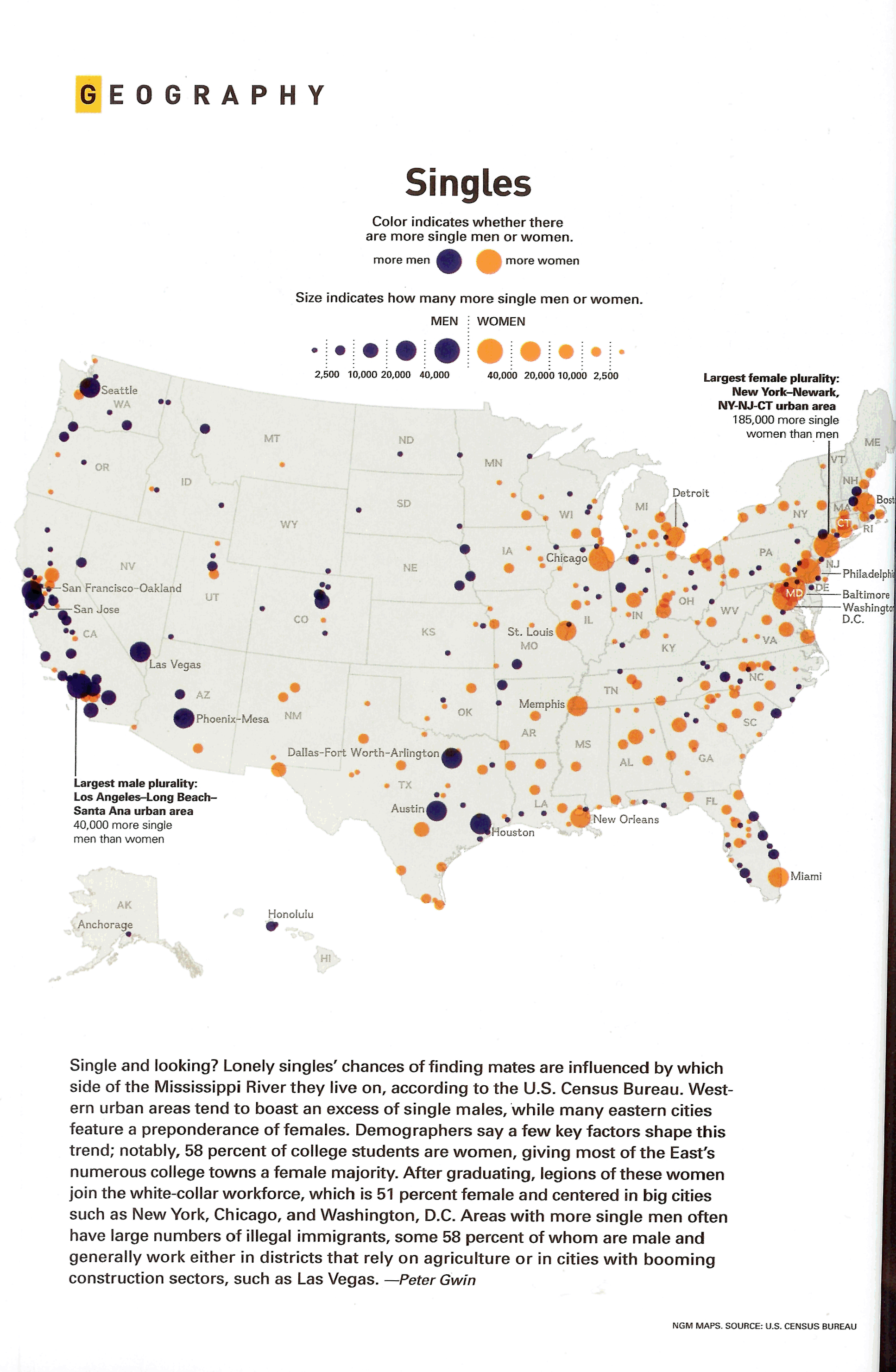
A little old (circa 2007), and probably the wrong thing to follow that last post with, but here’s a map of where the ratios of single men-to-women are imbalanced in America. Have a nice weekend!
Disturbing
In: Culture
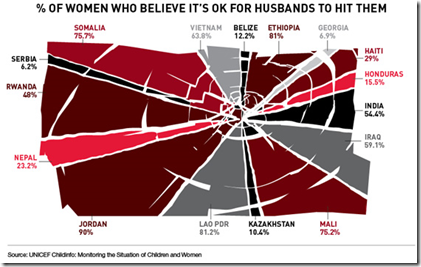
2 Oct 2009The original data is from the UN. It would be interesting to see this stat for the United States.
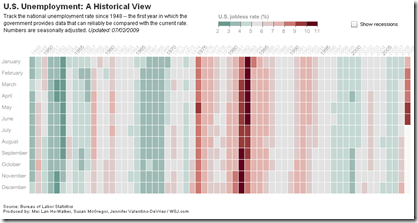
Historical Unemployment
2 Oct 2009A nice change from the usual line chart, from the WSJ.
Politics, Age, and Gay Marriage
In: Culture
2 Oct 2009Old people and young people often disagree on important issues. the chart below illustrates how different our culture’s views of gay marriage are across generations (and states, for that matter). From Ryan Sager.


What is Chart Porn?
An addictive collection of beautiful charts, graphs, maps, and interactive data visualization toys -- on topics from around the world.
Categories
- Bailout (118)
- Chartporn Related (3)
- Commentary (21)
- Culture (669)
- Emerging Markets (66)
- Employment (245)
- Environment/weather (133)
- Finance (298)
- Food (92)
- Global Economy (373)
- Graphic Design (bad) (26)
- Graphic Design (general) (183)
- Graphic Tools (23)
- History (158)
- Housing (162)
- Humor (204)
- Innovative (183)
- Interactive (545)
- Internet/tech (97)
- Maps (578)
- News Media (34)
- Politics (329)
- Reference (97)
- Science (331)
- Source: Economist (101)
- Source: FT (92)
- Source: NYT (147)
- Source: Ritholtz (76)
- Source: USA Today (27)
- Source: Washington Post (90)
- Source: WSJ (135)
- Sports (58)
- Stock Market (74)
- Uncategorized (2)
- Updated regularly (76)
- US Economy (553)
- Video (22)
- Aram Korevaar: This chart is now being used as a projection in which countries such as China see themselves as in a [...]
- David: Welcome back Chart Porn! [...]
- J S: Thanks for the great story. Miss reading this blog. Hope to see you more active again. [...]
- jake: I lived in a DC row house for 6 years, and I'm writing this comment from my tiny 1 bedroom apartment [...]
- ronny pettersen: Hilarious and unfortunately accurate... ;-) [...]