
Stock Market Archive:
Dow Jones Quarterly Earnings
17 Apr 2009Interactive chart showing earnings and market cap since crisis began.

Global Equity Performance Map
In: Emerging Markets Finance Global Economy Interactive Maps Source: FT Stock Market Updated regularly US Economy
14 Apr 2009Interactive map displays the performance of all the major global equity markets for today, or versus a selection of time periods (5days/10days/1month/etc up to a year). You can also click on any exchange to drill down to more information.
[Note: There is no direct link to the map (silly java), you have to click on the "Market Macromap" window on this page]

WSJ Economic Forecasting Survey (April results)
In: Bailout Employment Finance Interactive Source: WSJ Stock Market Updated regularly US Economy
13 Apr 2009Interactive survey of 55 economists on a number of indicators and issues.

S&P Executive Pay 2008
In: Bailout Employment Source: Washington Post Stock Market US Economy
8 Apr 2009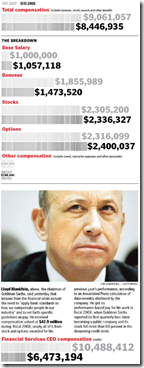
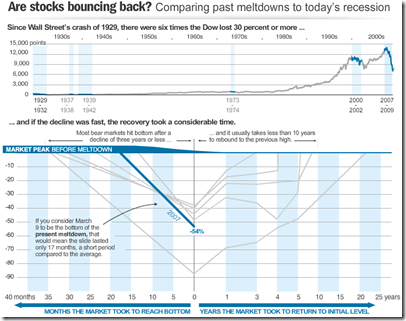
Recession Comparison
8 Apr 2009Interactive toy that bases recessions around the “bottoms”, from nicolasrapp.
Market Tree Map
In: Finance Interactive Maps Reference Stock Market Updated regularly US Economy
2 Apr 2009A tree map of more than 500 stocks, updated every 15 minutes. Click on the roll-over popups to bring up a pretty detailed drill down menu.

Stock Market Heat Map
In: Global Economy Interactive Maps Source: WSJ Stock Market US Economy
1 Apr 2009Interactive map of equity market performance (click on tabs to switch between quarters; click on dots for values)

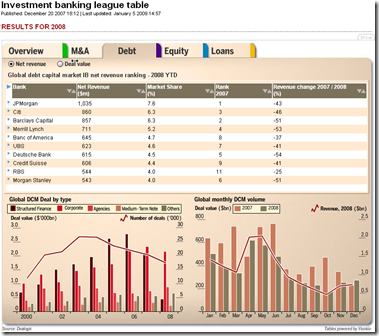
Investment Banking (Q109 update)
In: Bailout Finance Interactive Maps Source: FT Stock Market Updated regularly US Economy
29 Mar 2009Interactive tables and charts showing different kinds of IB operations over time (from the FT).
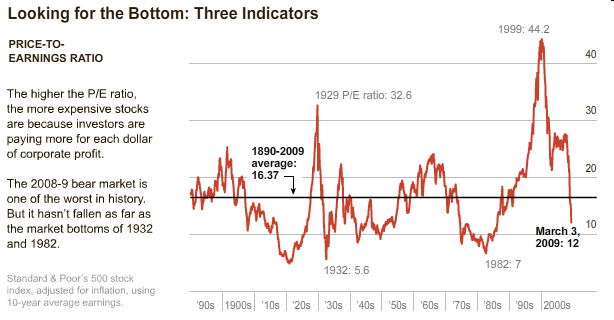
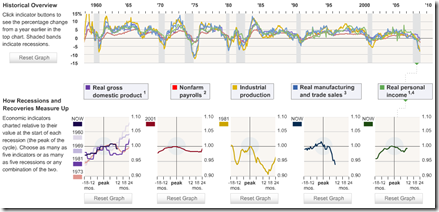
US Recession Comparison
In: Finance Interactive Source: WSJ Stock Market Updated regularly US Economy
2 Mar 2009This is a slightly complicated interactive way of viewing 5 different indicators across different recessions periods. It takes a minute to figure out how to work it, but it’s nifty once you do.
S&P Performance by Sector (updated daily)
In: Finance Interactive Reference Source: NYT Stock Market Updated regularly US Economy
25 Feb 2009Ok, someone obviously spent a lot of time designing this one, and it is very cool.
You select a sector (~30 are available) and the bubble chart shows how companies performed versus the short and long-term S&P 500. The bubble size shows market cap. You can easily change change the timeframe of the comparison (day, week, month, quarter, year) and scales, and drill down through company data.
example:
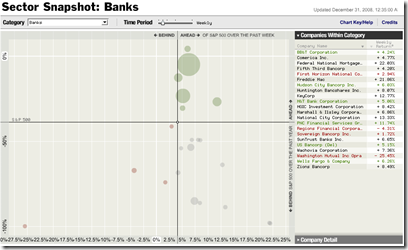
explanation:

10-year Return on Investments
9 Feb 2009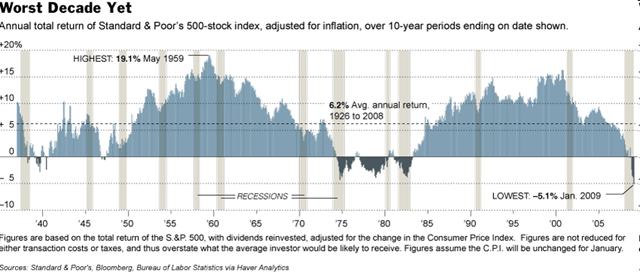
Do Analysts Ever Get it Right?
9 Feb 2009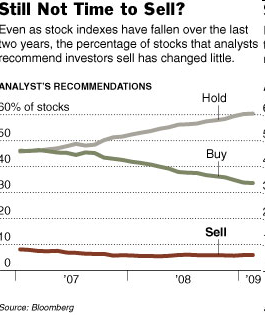


What is Chart Porn?
An addictive collection of beautiful charts, graphs, maps, and interactive data visualization toys -- on topics from around the world.
Categories
- Bailout (118)
- Chartporn Related (3)
- Commentary (21)
- Culture (669)
- Emerging Markets (66)
- Employment (245)
- Environment/weather (133)
- Finance (298)
- Food (92)
- Global Economy (373)
- Graphic Design (bad) (26)
- Graphic Design (general) (183)
- Graphic Tools (23)
- History (158)
- Housing (162)
- Humor (204)
- Innovative (183)
- Interactive (545)
- Internet/tech (97)
- Maps (578)
- News Media (34)
- Politics (329)
- Reference (97)
- Science (331)
- Source: Economist (101)
- Source: FT (92)
- Source: NYT (147)
- Source: Ritholtz (76)
- Source: USA Today (27)
- Source: Washington Post (90)
- Source: WSJ (135)
- Sports (58)
- Stock Market (74)
- Uncategorized (2)
- Updated regularly (76)
- US Economy (553)
- Video (22)
- Aram Korevaar: This chart is now being used as a projection in which countries such as China see themselves as in a [...]
- David: Welcome back Chart Porn! [...]
- J S: Thanks for the great story. Miss reading this blog. Hope to see you more active again. [...]
- jake: I lived in a DC row house for 6 years, and I'm writing this comment from my tiny 1 bedroom apartment [...]
- ronny pettersen: Hilarious and unfortunately accurate... ;-) [...]
Mea Culpa from Goldman Sachs
In: Commentary Finance Source: FT Stock Market US Economy
9 Feb 2009No charts. Just a decent letter from CEO Lloyd Blankfein to the FT on mistakes and lessons. Excerpts: