
Interactive Archive:
Fun With Infectious Diseases
In: Global Economy Innovative Interactive Maps Science Source: FT
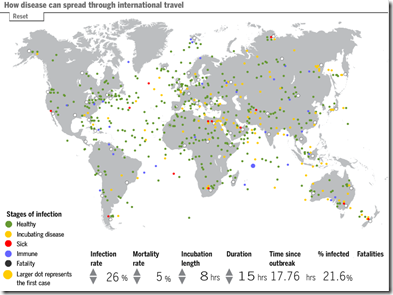
6 Aug 2009A morbid tool from the FT. Click on any traveler on the map to make him sick, then watch the disease spread. Modify the infection rate, mortality rates, and other factors to see how they affect the simulation.
UNEP Atlas of Environmental Impact
6 Aug 2009Click on any item on the map, then on “Story”. Spotted over at Kelso’s Corner.

Changing British Meals
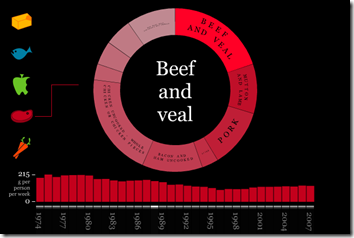
6 Aug 2009Cool interactive presentation of the changing composition of British eating since 1974, by food group. I’d love to see this for the USA. Spotted by FlowingData.
An American Day
3 Aug 2009
Meme Visualization
14 Jul 2009Similar in interaction to the Baby Name Wizard, this chart shows the frequency of top media quotes over time. Click on a single meme to zoom in and isolate it (or start typing in the box at the top and it will filter in real time – type “econ” for example).

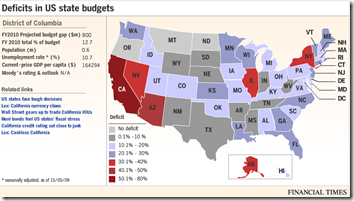
US States’ Fiscal Problem
13 Jul 2009As of 5/15/09. Roll-overs provide detailed data. Related article.
Map of Human Sexuality
In: Culture Humor Interactive Maps
12 Jul 2009It’s quite entertaining in it’s comprehensiveness, and the online interactive feature of adding your own “travel pins” puts it over the top.

WSJ Economist Survey (July 09 edition)
In: Bailout Employment Finance Housing Interactive Source: WSJ Updated regularly US Economy
12 Jul 2009Interactive results of a survey of 54 economists, on a number of indicators and issues. Updated Monthly. Related article.


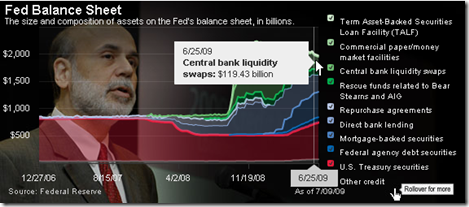
Fed Balance Sheet
12 Jul 2009Updated 7/9/9:
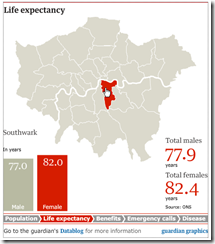
London Stats
11 Jul 2009London population, life expectancy, benefits, emergency calls, and disease.I think a heat map with the rollovers would have been better.
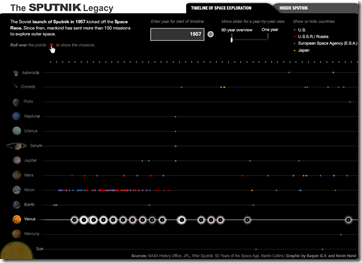
Space
2 Jul 2009Interactive timeline of space exploration. View by year or by planet.
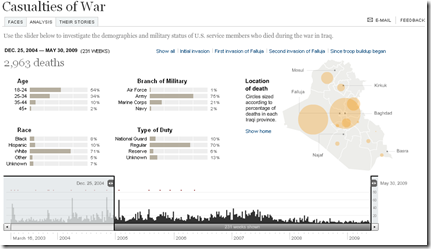
Casualties of War
In: Culture Graphic Design (general) Innovative Interactive Maps Politics Source: NYT
2 Jul 2009The breakdown by age, race, branch, and type of duty is fascinations, and the adjustable time scale is a nice touch.
From the Neolithic till today, filter by country, zoom in to specific historic events, or take a journey based on certain topics. Very well done, from the BBC.

US Job Forecast (June09 edition)
In: Employment Interactive Maps Source: USA Today Updated regularly US Economy
29 Jun 2009Moody’s US job forecast by region, sector, etc.

USA Today Economic Outlook Index (June edition)
In: Finance Housing Interactive Reference Source: USA Today Updated regularly US Economy
29 Jun 2009Updated June 24th. The best part is the lower chart showing the latest data for each of the 11 “leading indicators”.


What is Chart Porn?
An addictive collection of beautiful charts, graphs, maps, and interactive data visualization toys -- on topics from around the world.
Categories
- Bailout (118)
- Chartporn Related (3)
- Commentary (21)
- Culture (669)
- Emerging Markets (66)
- Employment (245)
- Environment/weather (133)
- Finance (298)
- Food (92)
- Global Economy (373)
- Graphic Design (bad) (26)
- Graphic Design (general) (183)
- Graphic Tools (23)
- History (158)
- Housing (162)
- Humor (204)
- Innovative (183)
- Interactive (545)
- Internet/tech (97)
- Maps (578)
- News Media (34)
- Politics (329)
- Reference (97)
- Science (331)
- Source: Economist (101)
- Source: FT (92)
- Source: NYT (147)
- Source: Ritholtz (76)
- Source: USA Today (27)
- Source: Washington Post (90)
- Source: WSJ (135)
- Sports (58)
- Stock Market (74)
- Uncategorized (2)
- Updated regularly (76)
- US Economy (553)
- Video (22)
- Aram Korevaar: This chart is now being used as a projection in which countries such as China see themselves as in a [...]
- David: Welcome back Chart Porn! [...]
- J S: Thanks for the great story. Miss reading this blog. Hope to see you more active again. [...]
- jake: I lived in a DC row house for 6 years, and I'm writing this comment from my tiny 1 bedroom apartment [...]
- ronny pettersen: Hilarious and unfortunately accurate... ;-) [...]