
Interactive Archive:
State Budget Deficits
2 Aug 2010Yields on top-rated, tax exempt US municipal bonds have dropped to near-record lows, allowing many local borrowers to access cheap financing in spite of their recent fiscal troubles. Following concerns over public finances in Europe, the $2,800bn market for “munis” has come into the spotlight after several years of budget deficits. Related articles.

Update: AP Economic Stress Map
2 Aug 2010This map displays unemployment, foreclosures, bankruptcies, or a composite “stress index”, by county. Easy to miss: in the upper right you can change the scale of the mapping (rates, m-t-m, y-t-y). To look at data over time, click on the “monthly rates” option and a historical slider will appear at the bottom. Double click on a region to zoom in. Updated 8/2/10.

If You Were on the Supreme Court
29 Jul 2010For each of six questions, your answers will be compared to public opinion polls and recent decisions of the supreme court.

Reforming the Global Financial System
In: Finance Global Economy Interactive Maps Politics Source: FT
28 Jul 2010From Dodd-Frank to Basel III, this graphic explains the current plans for global financial regulatory reform in advanced economies, from the US to the eurozone.


(note: some FT items require a subscription – you can view up to 10 articles a month for free)
SF-NY-CHI-BOS Marathons
26 Jul 2010A slick comparison of the routes, elevation, history, and conditions.

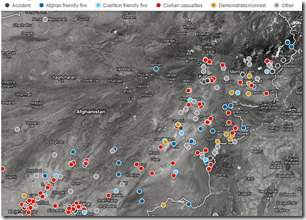
Map: Wikileaks Afghan Incidents
In: Interactive Maps Politics
26 Jul 2010Interactive map of 300 accidents, friendly fires, civilian casualties, and demonstrations. Drill down to detailed reports.
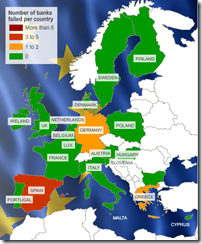
Map: European Bank Stress Tests
26 Jul 2010This is kind of a silly map considering only 7 of 91 banks failed. Related article.
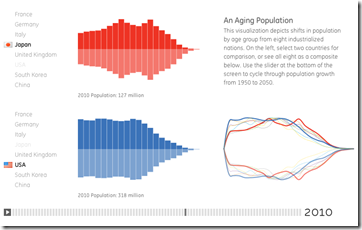
Demographics (1950-2050)
25 Jul 2010A very smooth interactive that allows you to compare the population composition of 8 countries over time. You can see some interesting trends by playing with the timeline control at the bottom — like watching the baby boom bulge move through the USA population then disappear, or the holes left in european age groups by WWII.
Update: NPR’s Toxic Real Estate Asset
24 Jul 2010Planet Money bought a toxic mortgage asset and has been tracking it’s death spiral. It’s now almost completely dead (non-performing). In a recent article they also tried to track down the people who originally took out the mortgages.

Top Secret America
19 Jul 2010Interactive exploration of the 45 Government agencies, 2000+ companies, and 854,000+ people working on government security. Part of the Washington Post’s 3-part series on the growth of national security infrastructure since 9/11.


Grandparents Competing with Teenagers for Jobs
17 Jul 2010Interesting multi-part interactive analysis from Bloomberg about changing job-force dynamics. (via the Big Picture)


The Financial Overhaul Bill: What Does it Fix?
16 Jul 2010Problems, solutions, and the lowdown on each systemic issue.

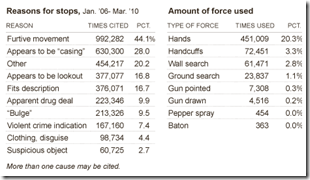
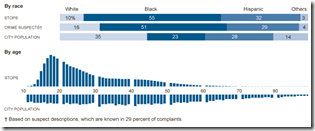
Where to Get Harassed by Cops in NYC
12 Jul 2010The NYT has an interactive map and related charts of where NYC police have been utilizing the “stop, question, and frisk” policy. Related article.

Apple vs Google vs Microsoft
12 Jul 2010Numbers and products – keep clicking, the drill-down goes down quite far.


What is Chart Porn?
An addictive collection of beautiful charts, graphs, maps, and interactive data visualization toys -- on topics from around the world.
Categories
- Bailout (118)
- Chartporn Related (3)
- Commentary (21)
- Culture (669)
- Emerging Markets (66)
- Employment (245)
- Environment/weather (133)
- Finance (298)
- Food (92)
- Global Economy (373)
- Graphic Design (bad) (26)
- Graphic Design (general) (183)
- Graphic Tools (23)
- History (158)
- Housing (162)
- Humor (204)
- Innovative (183)
- Interactive (545)
- Internet/tech (97)
- Maps (578)
- News Media (34)
- Politics (329)
- Reference (97)
- Science (331)
- Source: Economist (101)
- Source: FT (92)
- Source: NYT (147)
- Source: Ritholtz (76)
- Source: USA Today (27)
- Source: Washington Post (90)
- Source: WSJ (135)
- Sports (58)
- Stock Market (74)
- Uncategorized (2)
- Updated regularly (76)
- US Economy (553)
- Video (22)
- Aram Korevaar: This chart is now being used as a projection in which countries such as China see themselves as in a [...]
- David: Welcome back Chart Porn! [...]
- J S: Thanks for the great story. Miss reading this blog. Hope to see you more active again. [...]
- jake: I lived in a DC row house for 6 years, and I'm writing this comment from my tiny 1 bedroom apartment [...]
- ronny pettersen: Hilarious and unfortunately accurate... ;-) [...]