
Housing Archive:
Housing Recovery?
28 Dec 2009Note that the last 3 years below are forecasts.

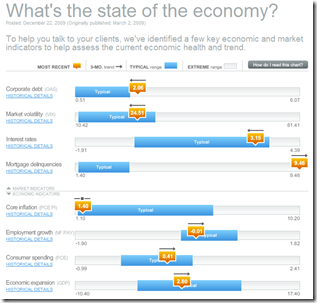
Economic Recovery Dashboard (Dec 09 ver)
In: Employment Finance Global Economy Housing Interactive US Economy
22 Dec 2009December update of one of my favorite summaries of economic indicators. If you normally find this stuff confusing you should check it out – click on any of the “historical details” to see what each indicator means and why it’s important.
Vegas Hotels
In: Culture Housing US Economy
21 Dec 2009The ebbs and flows of hotels in Vegas is an interesting supply and demand demonstration (of course real estate in Vegas generally ignores those laws). (via Infectious Greed)

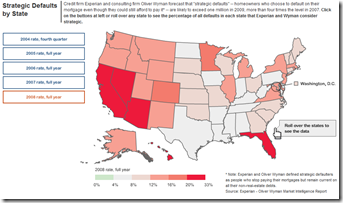
Strategic Defaults
14 Dec 2009Homeowners who choose to default on their mortgage even though they could still pay for it.

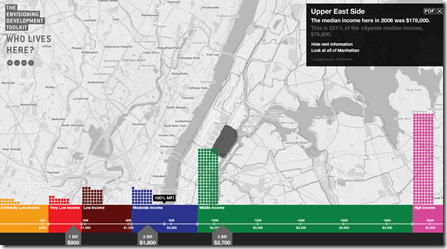
Who Can Afford to Live in NYC?
2 Dec 2009Click on any section of NYC to see the income distribution in that area, and what the average rents are. (via)
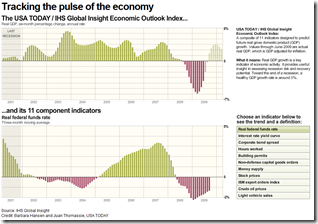
USA Today Economic Outlook Index (November edition)
In: Employment Finance Housing Source: USA Today Updated regularly US Economy
1 Dec 2009Updated November 24th. The best part is the lower chart showing the latest data for each of the 11 “leading indicators”.

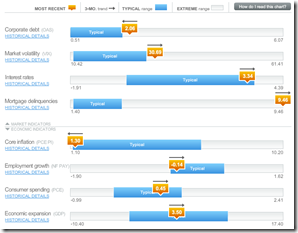
Economic Recovery Dashboard (Nov 09 ver)
In: Employment Finance Global Economy Housing Interactive US Economy
23 Nov 2009November update of one of my favorite summaries of economic indicators. If you normally find this stuff confusing you should check it out – click on any of the “historical details” to see what each indicator means and why it’s important.
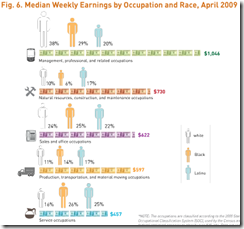
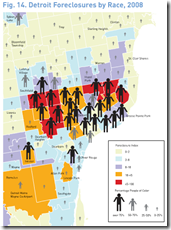
Race and Recession
9 Nov 2009The Applied Research Center has a report on race and the recession that includes a number of charts examining the breakdown of unemployment, earnings, and foreclosures, by race. (via)
AP Economic Stress Map (November update)
In: Employment Finance Housing Interactive Maps Updated regularly US Economy
2 Nov 2009Updated November 2nd. The map displays unemployment, foreclosures, bankruptcy, or a composite “stress index”, by county. In the upper right you can change the period the %-change is calculated for. To look at data over time, click on the “Oct.2007 to present” option and a historical slider will appear at the bottomDouble click on a region to zoom in; click & hold to move around.

USA Today Economic Outlook Index (October edition)
In: Employment Finance Housing Interactive Stock Market US Economy
2 Nov 2009Updated October 28th. The best part is the lower chart showing the latest data for each of the 11 “leading indicators”.
Who Owns Mortgages?
In: Finance Housing US Economy
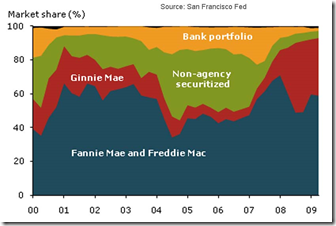
26 Oct 2009Fannie Mae and Freddie Mac combined have consistently been the largest players in the market, owning or guaranteeing about half or more of the mortgages in the sample at any given time. Non-agency securitization peaked in the first quarter of 2006, when it accounted for nearly 40% of new originations. Finally, the share of mortgages retained in the originating institution’s portfolio averaged about 15% throughout the boom, but has fallen considerably since. (from SF Fed via Calculated Risk)
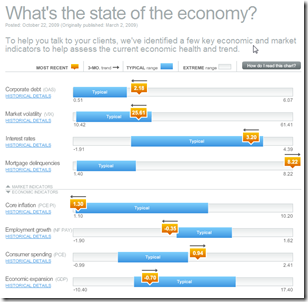
Economic Recovery Dashboard (Oct 09 ver)
24 Oct 2009October update of one of my favorite summaries of economic indicators. If you normally find this stuff confusing you should check it out — click on any of the “historical details” to see what each indicator means and why it’s important.
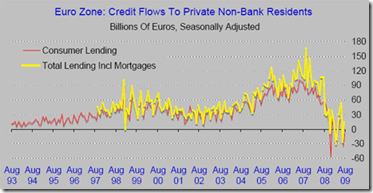
EU: Lending Down
18 Oct 2009We’ve seen this data before for the United States. The below chart confirms the same for the EU: banks are not lending.
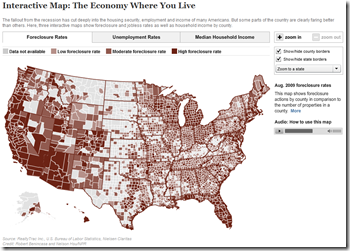
NPR Economy Map
18 Oct 2009Foreclosures, unemployment, and median household income. The scales are a little vague on two of the maps — but it’s ok for broad comparative purposes.


What is Chart Porn?
An addictive collection of beautiful charts, graphs, maps, and interactive data visualization toys -- on topics from around the world.
Categories
- Bailout (118)
- Chartporn Related (3)
- Commentary (21)
- Culture (669)
- Emerging Markets (66)
- Employment (245)
- Environment/weather (133)
- Finance (298)
- Food (92)
- Global Economy (373)
- Graphic Design (bad) (26)
- Graphic Design (general) (183)
- Graphic Tools (23)
- History (158)
- Housing (162)
- Humor (204)
- Innovative (183)
- Interactive (545)
- Internet/tech (97)
- Maps (578)
- News Media (34)
- Politics (329)
- Reference (97)
- Science (331)
- Source: Economist (101)
- Source: FT (92)
- Source: NYT (147)
- Source: Ritholtz (76)
- Source: USA Today (27)
- Source: Washington Post (90)
- Source: WSJ (135)
- Sports (58)
- Stock Market (74)
- Uncategorized (2)
- Updated regularly (76)
- US Economy (553)
- Video (22)
- Aram Korevaar: This chart is now being used as a projection in which countries such as China see themselves as in a [...]
- David: Welcome back Chart Porn! [...]
- J S: Thanks for the great story. Miss reading this blog. Hope to see you more active again. [...]
- jake: I lived in a DC row house for 6 years, and I'm writing this comment from my tiny 1 bedroom apartment [...]
- ronny pettersen: Hilarious and unfortunately accurate... ;-) [...]