
Employment Archive:
US Economic Stress Index (April 09 data)
In: Employment Finance Housing Interactive Maps Updated regularly US Economy
16 Jun 2009AP added to an already good interactive chart this month – you can now click through different periods with the slider at the bottom. The map displays unemployment, foreclosures, bankruptcy, or a composite “stress index”, by county. In the upper right you can change the period the %-change is calculated for. Double click on a region to zoom in; click&hold to move around.

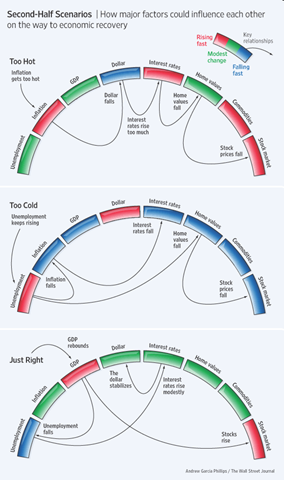
Perfect Landing
In: Bailout Employment Finance Housing Innovative Reference Source: WSJ
15 Jun 2009Ritholtz spotted this nice WSJ graphic on the importance of executing the Fed’s recession exit strategy just right. Related WSJ article.
Debt, Debt, Debt, and Then You Die
14 Jun 2009A playful and informative collection of stats about the debt that people accumulate throughout life.

from creditloan.com.
(by the way, anyone ever come across stats on what amount of debt default happens because of death?)
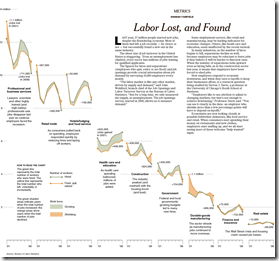
Deeper Look at (Un)Employment
14 Jun 2009A very nice look at sector specific hiring and firing. I wish it included 2009 data.
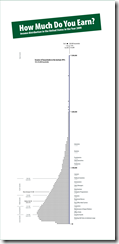
Rich or Poor?
27 May 2009I think a lot of us take for granted how good we have it. Here’s a nice look at how “rich” you are, by Catherine Mulbrandon at visualizingeconomics.com. It’s been around for a while (uses 2000 data), but I just found her website this week.
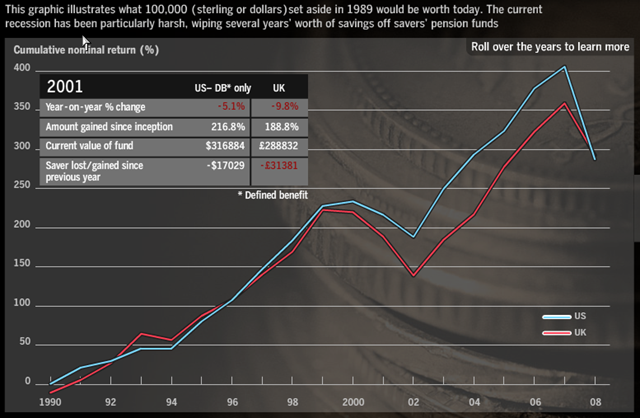
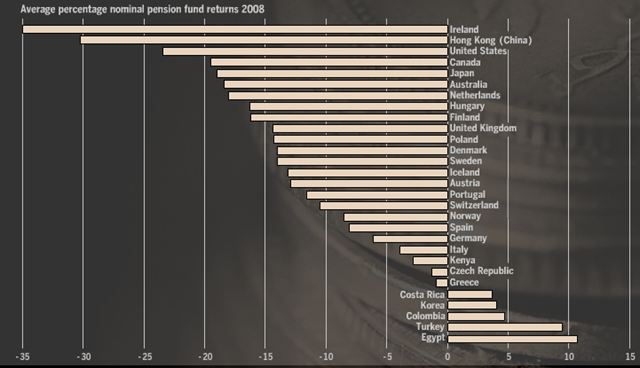
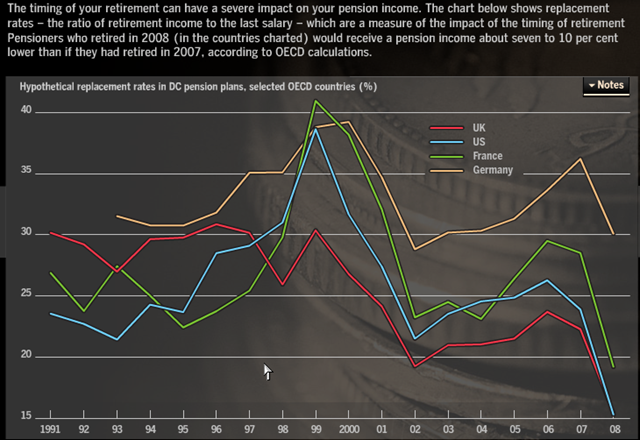
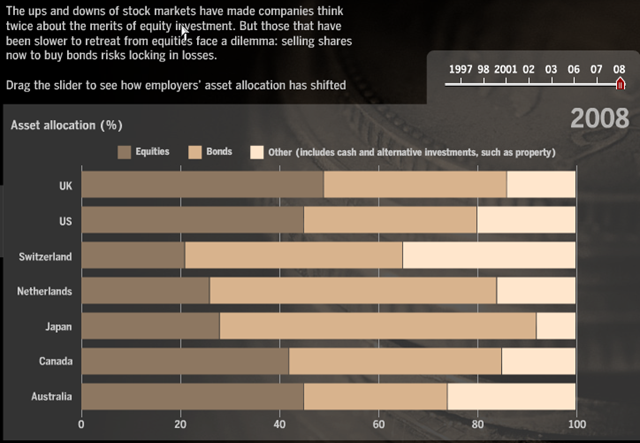
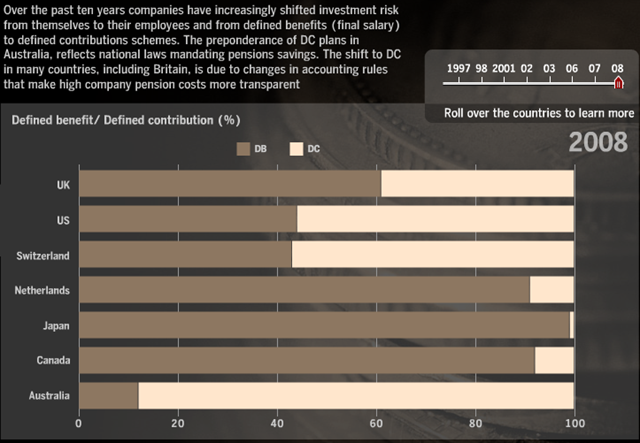
Pension Losses
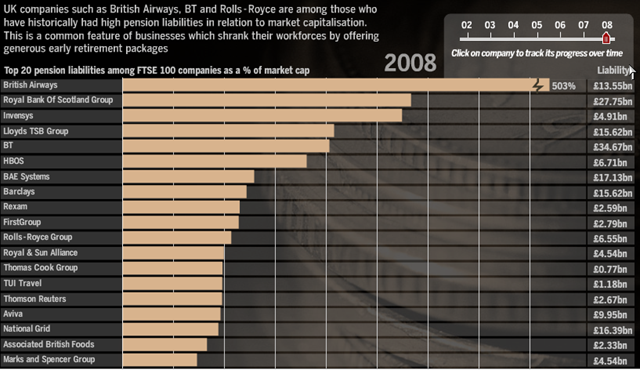
27 May 2009Buried in a lot of videos and audio analysis on this FT tool are some very interesting charts showing how much damage has been done to pension systems around the world (and not just in the past year).
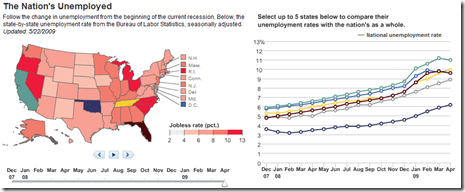
US Unemployment Map
27 May 2009Data from Dec 07- Apr 09. There isn’t too much interesting here, unless you want to compare states using the chart on the right.
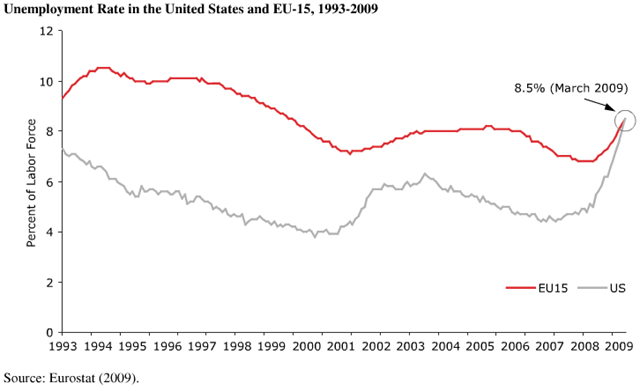
US/EU Unemployment Rates Converging
In: Employment US Economy
21 May 2009“From the early 1990s through the peak of the last business cycle, relatively low U.S. unemployment rates seemed to make the United States a model for the rest of the world’s economies. The Organization for Economic Cooperation and Development (OECD), the International Monetary Fund (IMF), and other international organizations all praised the U.S. unemployment performance and urged the rest of the world’s rich countries to emulate the “flexibility” of the U.S. model. However, this report shows that in the current economic crisis, the U.S. unemployment rate ranks 4th to last among the major OECD countries.” Source: CEPR
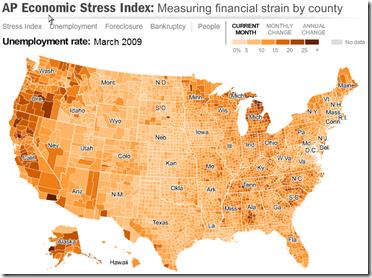
US Economic Stress Index (March 09 data)
17 May 2009More good work from AP. Shows unemployment, foreclosures, bankruptcy, and a composite “stress index”. Double click on a region to zoom in; click&hold to move around.
Bad Time to Graduate
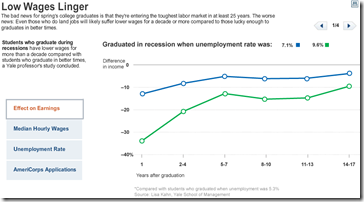
15 May 2009“The bad news for spring’s college graduates is that they’re entering the toughest labor market in at least 25 years. The worse news: Even those who do land jobs will likely suffer lower wages for a decade or more.” Related article. Tab through related stats in the below graphic:
US Job Forecast (4/24/09 update)
In: Employment Interactive Maps Source: USA Today US Economy
11 May 2009Highly interactive display (by sector, region, time) of Moody’s forecast for US employment through 2012.

The Aging World
11 May 2009If recent economic data isn’t depressing enough, here’s some from the future to remind you that everyone has some nice Malthusian demographic mountains to climb in the next 20+ years.

Green Shoots Nonsense?
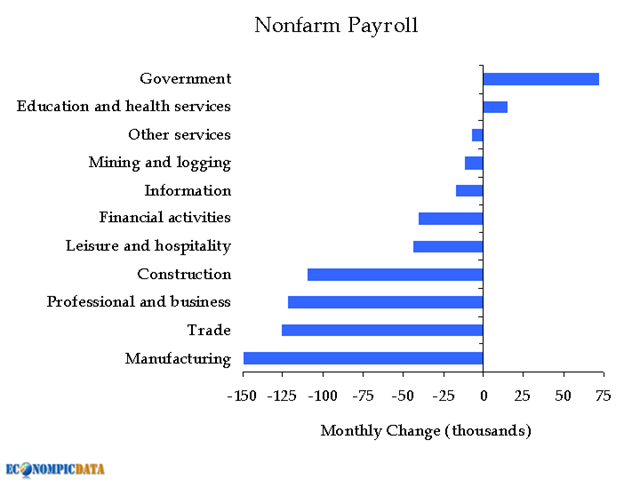
11 May 2009More statistical games with April’s employment numbers. The mainstream media have focused on the numbers being “good” because they aren’t falling as fast as previous months (a bit of a reach, IMHO). But several bloggers have pointed out that the 539,000 job losses only look good because of government hiring for the census. otherwise the losses are 611,000. Here is EconomPic’s graph:
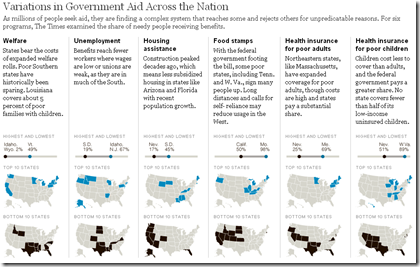
Red tape and guidelines vary widely across the US. Related article.
Executive Compensation 2008
In: Bailout Employment Finance Interactive Source: USA Today US Economy
5 May 2009A nice presentation from USA today which shows salary, bonuses, stock options, other compensation. versus stock performance. Also allows you to filter by industry using the tabs at top. Related article.


What is Chart Porn?
An addictive collection of beautiful charts, graphs, maps, and interactive data visualization toys -- on topics from around the world.
Categories
- Bailout (118)
- Chartporn Related (3)
- Commentary (21)
- Culture (669)
- Emerging Markets (66)
- Employment (245)
- Environment/weather (133)
- Finance (298)
- Food (92)
- Global Economy (373)
- Graphic Design (bad) (26)
- Graphic Design (general) (183)
- Graphic Tools (23)
- History (158)
- Housing (162)
- Humor (204)
- Innovative (183)
- Interactive (545)
- Internet/tech (97)
- Maps (578)
- News Media (34)
- Politics (329)
- Reference (97)
- Science (331)
- Source: Economist (101)
- Source: FT (92)
- Source: NYT (147)
- Source: Ritholtz (76)
- Source: USA Today (27)
- Source: Washington Post (90)
- Source: WSJ (135)
- Sports (58)
- Stock Market (74)
- Uncategorized (2)
- Updated regularly (76)
- US Economy (553)
- Video (22)
- Aram Korevaar: This chart is now being used as a projection in which countries such as China see themselves as in a [...]
- David: Welcome back Chart Porn! [...]
- J S: Thanks for the great story. Miss reading this blog. Hope to see you more active again. [...]
- jake: I lived in a DC row house for 6 years, and I'm writing this comment from my tiny 1 bedroom apartment [...]
- ronny pettersen: Hilarious and unfortunately accurate... ;-) [...]