
Employment Archive:
Income Equalizing?
10 Sep 2009Four charts on income inequality in the United States. The related article argues that the recession may be lowering the gap by clobbering the wealthy.
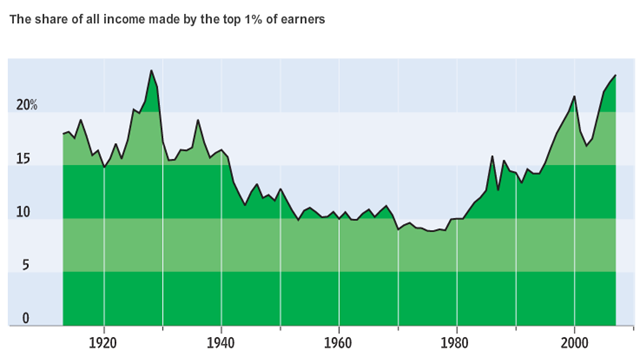
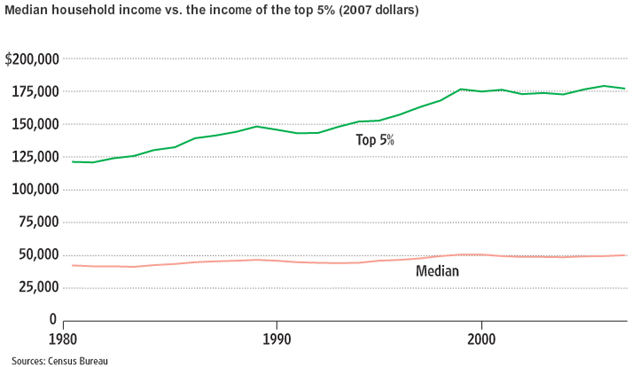
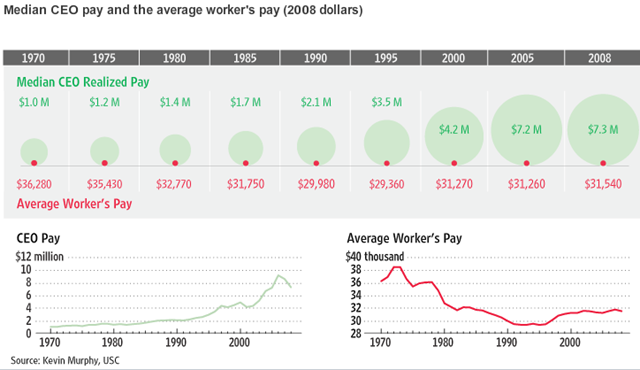
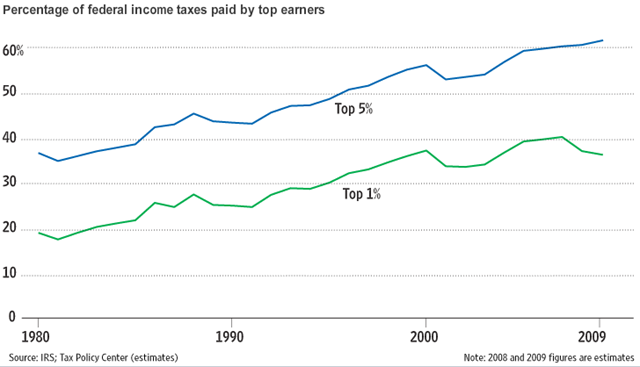
US Demographics 1950-2050
In: Employment US Economy
20 Aug 2009Animated graph of the US age distribution. (I think bigger groups would have made it clearer). (thanks to David Cramer for the link)

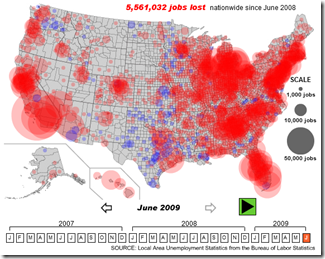
Job Losses by County, 1/07-6/09
11 Aug 2009year on year changes over time (not seasonally adjusted). Has roll-overs for county specific data.
Updated July 29th. The best part is the lower chart showing the latest data for each of the 11 “leading indicators”.

Related article. Via Ritholtz (again. read The Big Picture!)
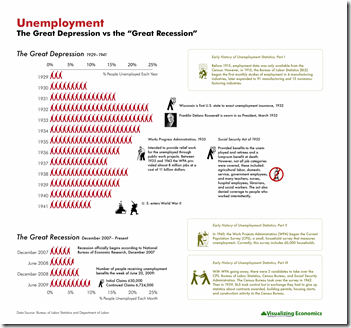
From Catherine over at Visualizing Economics.
WSJ Economist Survey (July 09 edition)
In: Bailout Employment Finance Housing Interactive Source: WSJ Updated regularly US Economy
12 Jul 2009Interactive results of a survey of 54 economists, on a number of indicators and issues. Updated Monthly. Related article.


(another) US Unemployment Map
In: Employment Maps Source: NYT Updated regularly US Economy
9 Jul 2009Quite similar to the AP map I mentioned last month, the NYT has created a map of national unemployment (with data through May09). Some of the filters are interesting in this version:

Getting Old
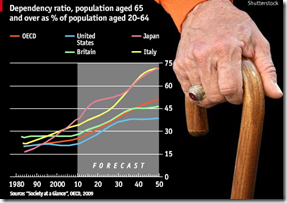
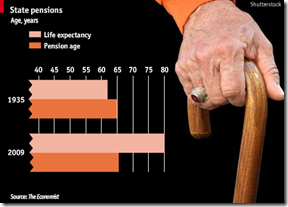
8 Jul 2009Animated charts with talk-over commentary on why most countries’ pension systems are in trouble.
In 1935, when America first introduced state pensions to relieve poverty in old age, the average life expectancy was 62. The official pension age was 65. That meant the cost of the pension system was very modest.
These days people live a lot longer. America’s official pension age is now 66, but people on average retire at 64 and can then expect to draw their pension for 16 years.
US Job Forecast (June09 edition)
In: Employment Interactive Maps Source: USA Today Updated regularly US Economy
29 Jun 2009Moody’s US job forecast by region, sector, etc.

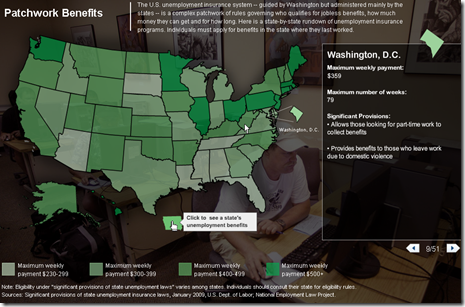
Best State to Be Unemployed?
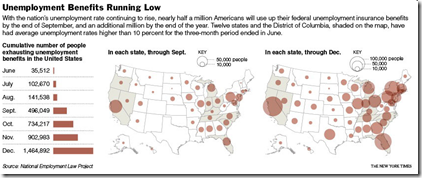
26 Jun 2009Map of each States’ unemployment benefits. Related article.
Yet Another Recovery Index
In: Bailout Employment Finance Housing Updated regularly US Economy
22 Jun 2009This one from Kiplinger. Pretty standard stuff – a color-coded summary and charts for each of six components. Uses a pretty weak (but easy to understand) recovery threshold: “When at least three of the six indicators go fully positive — with a check mark from us — it’s more than likely that the recession has ended.” The "watch for" section of each indicator are interesting.


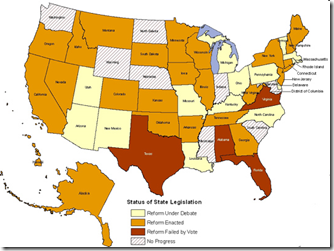
Unemployment Reform
22 Jun 2009Many states are modifying their unemployment benefit laws, some in connection to the recession and some to take advantage of federal stimulus money. Related NYT blog post.
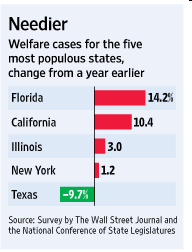
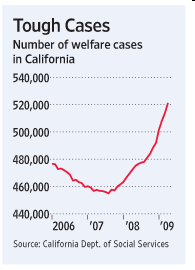
Welfare Rolls Swelling
22 Jun 2009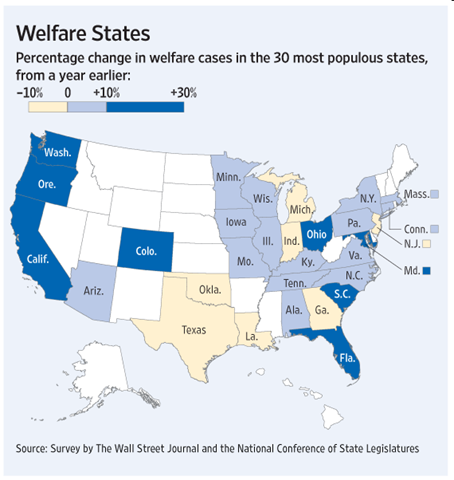
WSJ Economist Survey (June 09 edition)
In: Employment Finance Global Economy Housing Interactive Source: WSJ Stock Market Updated regularly US Economy
18 Jun 2009Monthly interactive survey of 54 economist on a number of indicators and issues.


What is Chart Porn?
An addictive collection of beautiful charts, graphs, maps, and interactive data visualization toys -- on topics from around the world.
Categories
- Bailout (118)
- Chartporn Related (3)
- Commentary (21)
- Culture (669)
- Emerging Markets (66)
- Employment (245)
- Environment/weather (133)
- Finance (298)
- Food (92)
- Global Economy (373)
- Graphic Design (bad) (26)
- Graphic Design (general) (183)
- Graphic Tools (23)
- History (158)
- Housing (162)
- Humor (204)
- Innovative (183)
- Interactive (545)
- Internet/tech (97)
- Maps (578)
- News Media (34)
- Politics (329)
- Reference (97)
- Science (331)
- Source: Economist (101)
- Source: FT (92)
- Source: NYT (147)
- Source: Ritholtz (76)
- Source: USA Today (27)
- Source: Washington Post (90)
- Source: WSJ (135)
- Sports (58)
- Stock Market (74)
- Uncategorized (2)
- Updated regularly (76)
- US Economy (553)
- Video (22)
- Aram Korevaar: This chart is now being used as a projection in which countries such as China see themselves as in a [...]
- David: Welcome back Chart Porn! [...]
- J S: Thanks for the great story. Miss reading this blog. Hope to see you more active again. [...]
- jake: I lived in a DC row house for 6 years, and I'm writing this comment from my tiny 1 bedroom apartment [...]
- ronny pettersen: Hilarious and unfortunately accurate... ;-) [...]