
Culture Archive:
Weird Green Shoots
22 Jun 2009Not really a graphic (though there is a slideshow version), Kiplinger lists 10 Quirky Economic Indicators, from movie attendance to alligators and mosquitoes.

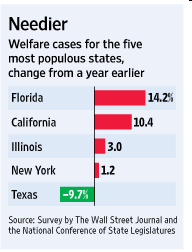
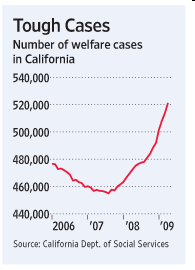
Welfare Rolls Swelling
22 Jun 2009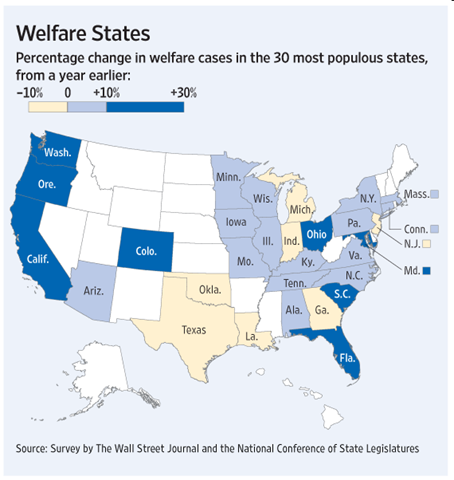
US Religion Map
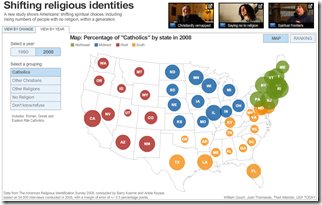
16 Jun 2009I should probably send this over to Junk Charts for a proper critique. The transition animations are pretty, and the topic is interesting, but damn there just isn’t anything actually informative popping out at me here that seems worth all that effort. Maybe the data just wasn’t “deep” enough in detail.
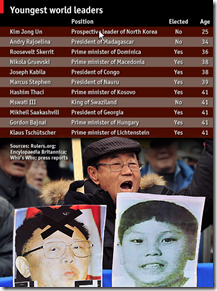
World’s Youngest Leaders
15 Jun 2009One of those odd interesting stats.
Death Odds, 1845-2006
31 May 2009A great animated chart showing the likelihood of dying at different ages over the years. I would think demographic data like this would be ripe for interesting visualizations. Nice job understandinguncertainty.org!

Two earlier posts/versions (one & two) don’t go back as far, but include the detailed explanation and some additional breakdown by risk factors.
ps – this data is for the UK.
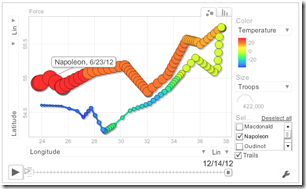
pps – the same site conducts a similar analysis of Charles Minard’s famous infographic of Napolean’s 1812 campaign (odds of dying as the campaign goes on), as well as a cool animated bubble heat map of the size and location of the army:
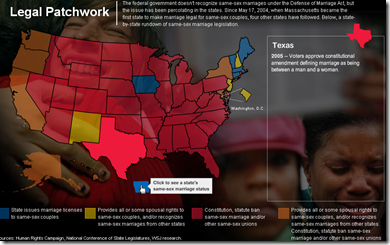
Map Of Same Sex Marriage Laws
19 May 2009Well, they have DC-2009 wrong (isn’t law yet).
The Seven Deadly Sins
5 May 2009
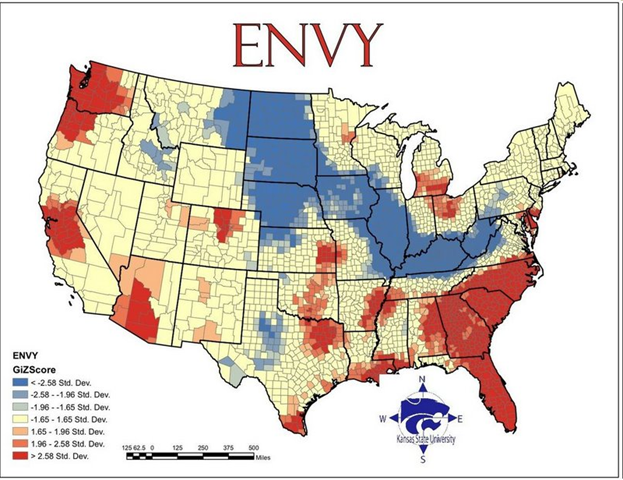

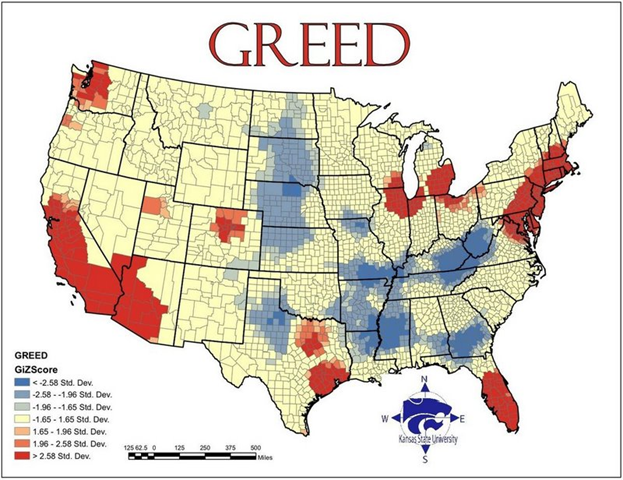


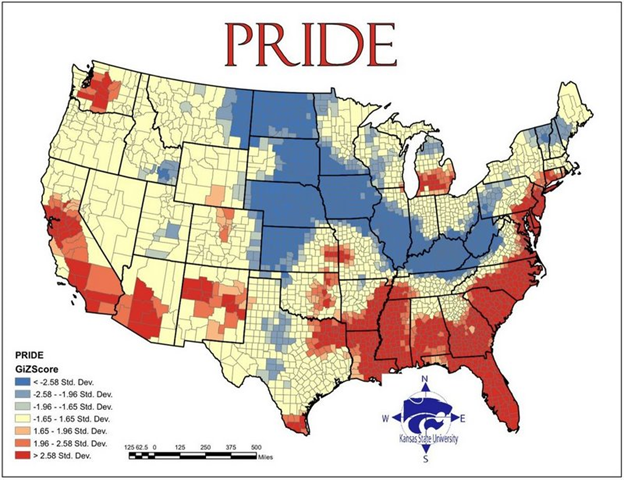
Greed was calculated by comparing average incomes with the total number of inhabitants living beneath the poverty line. Envy was calculated using the total number of thefts – robbery, burglary, larceny and stolen cars. Wrath was calculated by comparing the total number of violent crimes – murder, assault and rape – reported to the FBI per capita. Lust was calculated by compiling the number of sexually transmitted diseases – HIV, AIDS, syphilis, chlamydia and gonorrhea – reported per capita. Gluttony was calculated by counting the number of fast food restaurants per capita. Sloth was calculated by comparing expenditures on arts, entertainment and recreation with the rate of employment. And pride, lastly, is most important. The root of all sins, in this study, is the aggregate of all data. Vought and his Kansas colleagues combined all data from the six other sins and averaged it into an overview of all evil.
Related article with more details. (I couldn’t find the original study "The Spatial Distribution of the Seven Deadly Sins within Nevada” from Kansas State University)
Data Density
In: Culture Employment Food Global Economy Housing Innovative Maps Science
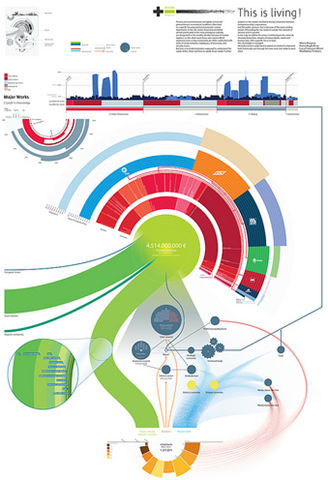
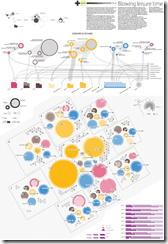
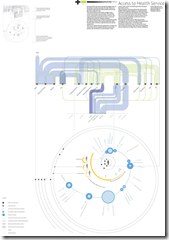
20 Apr 2009Visual Think Map recently turned me onto Design Density‘s Infographics – they include so much information it is almost hard to read them on a computer screen. truly “super-graphics” in Tufte’s meaning of the phrase.
Here’s a few examples on poverty related to housing, leisure, health care & food.

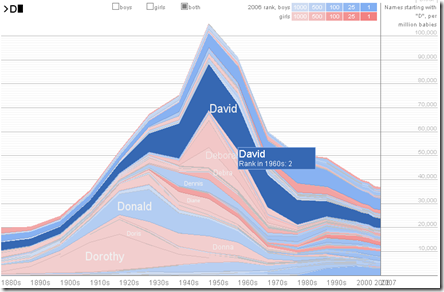
Name Wizard
2 Apr 2009The Name Voyager is a classic (2005) interactive chart of the popularity of names from 1880 until today. Just start typing your name and the chart filters and rescales automatically.
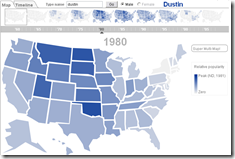
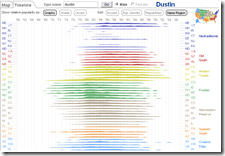
The same people created the NameMapper, which provides a US map or timeline of the name (the timeline in particular has some nifty options):


What is Chart Porn?
An addictive collection of beautiful charts, graphs, maps, and interactive data visualization toys -- on topics from around the world.
Categories
- Bailout (118)
- Chartporn Related (3)
- Commentary (21)
- Culture (669)
- Emerging Markets (66)
- Employment (245)
- Environment/weather (133)
- Finance (298)
- Food (92)
- Global Economy (373)
- Graphic Design (bad) (26)
- Graphic Design (general) (183)
- Graphic Tools (23)
- History (158)
- Housing (162)
- Humor (204)
- Innovative (183)
- Interactive (545)
- Internet/tech (97)
- Maps (578)
- News Media (34)
- Politics (329)
- Reference (97)
- Science (331)
- Source: Economist (101)
- Source: FT (92)
- Source: NYT (147)
- Source: Ritholtz (76)
- Source: USA Today (27)
- Source: Washington Post (90)
- Source: WSJ (135)
- Sports (58)
- Stock Market (74)
- Uncategorized (2)
- Updated regularly (76)
- US Economy (553)
- Video (22)
- Aram Korevaar: This chart is now being used as a projection in which countries such as China see themselves as in a [...]
- David: Welcome back Chart Porn! [...]
- J S: Thanks for the great story. Miss reading this blog. Hope to see you more active again. [...]
- jake: I lived in a DC row house for 6 years, and I'm writing this comment from my tiny 1 bedroom apartment [...]
- ronny pettersen: Hilarious and unfortunately accurate... ;-) [...]