
Culture Archive:
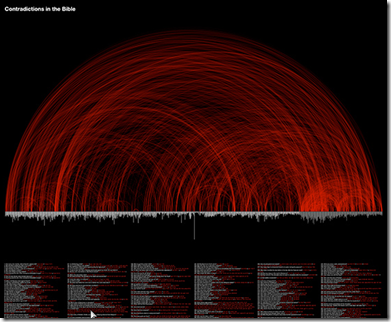
Contradictions in the Bible
12 Nov 2010This infographic identifies some 439 places where the Bible contradicts itself. From Project-reason.org.
What New Yorkers Complain About
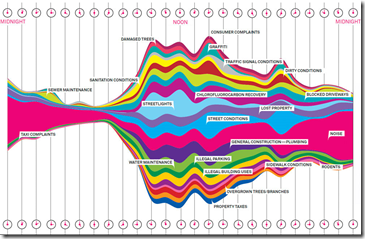
10 Nov 2010Based on 34,522 complaint calls to 311 over a one week period. (via Flowingdata)

The Graduate Thesis Repulsor Field
10 Nov 2010The Thesis Repulsor Field is characterized by an attractor vector field directed towards completion, but accompanied by an intensive repulsive singularity at the center. Thanks to Claire for the link.


I don’t care much for this style of infographic nowadays, but this one managed to hold my attention – something about actually using interesting information and the retro style graphics, I think.

Estimates of how much it costs to have a pet, over the course of it’s lifetime.

When your Relationship Will End
In: Culture Internet/tech
2 Nov 2010David McCandless used data from Facebook updates to look at when people break up with each other throughout the year. It looks like people like dating in the winter and being single in the summer – and a lot of people use breakups as an April Fool’s joke.

Most Harmful Drugs
1 Nov 2010A new study ranks 20 drugs on 16 measures of harm (both to users and to society). Thanks to Drave Cramer for sending the link.

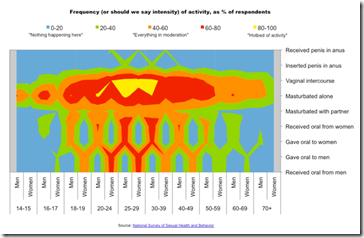
Sex in the USA
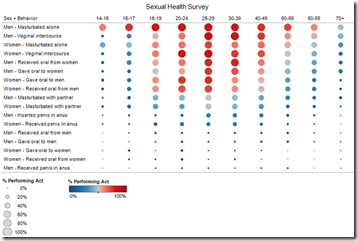
29 Oct 2010Flowingdata had a design contest this week based on data from the National Survey of Sexual Health and Behavior. Here are some of the interesting results:



Jimi Hendrix Timeline
In: Culture
26 Oct 2010A comprehensive timeline of Hendrix’s music and legacy, by Marco Giannini.

Updated: Periodic Table of Irrational Nonsense
25 Oct 2010Now, each “element” has a popup description/snarky comment.

Facebook Portrait Interpretation
24 Oct 2010This chart will hopefully help you view specific Facebook portraits within the context of the larger genre, and therefore lead to a richer, more complex appreciation of Facebook portraiture as an emerging form of banal, eye-numbing expression.
Thanks to Tom Dawkins for the link.

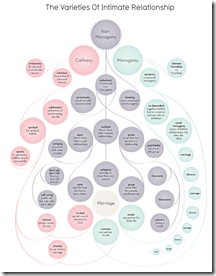
Varieties of Intimate Relationships
In: Culture
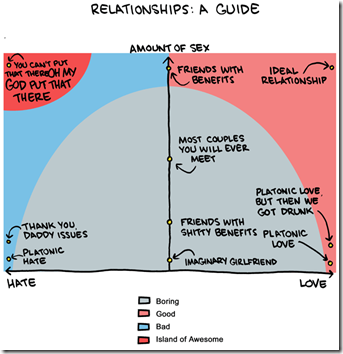
21 Oct 2010Some interesting distinctions, from Informationisbeautiful and Franklin Veaux.


What is Chart Porn?
An addictive collection of beautiful charts, graphs, maps, and interactive data visualization toys -- on topics from around the world.
Categories
- Bailout (118)
- Chartporn Related (3)
- Commentary (21)
- Culture (669)
- Emerging Markets (66)
- Employment (245)
- Environment/weather (133)
- Finance (298)
- Food (92)
- Global Economy (373)
- Graphic Design (bad) (26)
- Graphic Design (general) (183)
- Graphic Tools (23)
- History (158)
- Housing (162)
- Humor (204)
- Innovative (183)
- Interactive (545)
- Internet/tech (97)
- Maps (578)
- News Media (34)
- Politics (329)
- Reference (97)
- Science (331)
- Source: Economist (101)
- Source: FT (92)
- Source: NYT (147)
- Source: Ritholtz (76)
- Source: USA Today (27)
- Source: Washington Post (90)
- Source: WSJ (135)
- Sports (58)
- Stock Market (74)
- Uncategorized (2)
- Updated regularly (76)
- US Economy (553)
- Video (22)
- Aram Korevaar: This chart is now being used as a projection in which countries such as China see themselves as in a [...]
- David: Welcome back Chart Porn! [...]
- J S: Thanks for the great story. Miss reading this blog. Hope to see you more active again. [...]
- jake: I lived in a DC row house for 6 years, and I'm writing this comment from my tiny 1 bedroom apartment [...]
- ronny pettersen: Hilarious and unfortunately accurate... ;-) [...]
How Stupid is it to Buy a Diamond?
In: Commentary Culture History
29 Oct 2010This classic Atlantic article explains in detail how the USA was manipulated into thinking diamond rings are a classy expression of your love – when in fact they are just a ripoff. While reading it I couldn’t help but see multiple parallels to what happened to the housing market and the “american dream”.
Here is a chart of diamond prices, 1960-2010: