
I don’t know how I never noticed this before – but Google Maps does not include American Indian reservations on it’s maps. WTF? Below are Google’s map of Arizona, and the Bureau of Indian Affairs’ map of reservations in that state:


For comparison, below are Bing and Mapquest’s maps, which do identify the reservations:
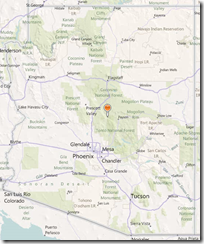
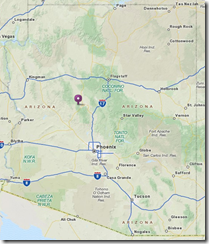
Weird. I can drill down a map until I see a photo of my front door, but Google can’t label sovereign nations occupying millions of acres of land?!? (via, via)
Comment Form


What is Chart Porn?
An addictive collection of beautiful charts, graphs, maps, and interactive data visualization toys -- on topics from around the world.
Categories
- Bailout (118)
- Chartporn Related (3)
- Commentary (21)
- Culture (669)
- Emerging Markets (66)
- Employment (245)
- Environment/weather (133)
- Finance (298)
- Food (92)
- Global Economy (373)
- Graphic Design (bad) (26)
- Graphic Design (general) (183)
- Graphic Tools (23)
- History (158)
- Housing (162)
- Humor (204)
- Innovative (183)
- Interactive (545)
- Internet/tech (97)
- Maps (578)
- News Media (34)
- Politics (329)
- Reference (97)
- Science (331)
- Source: Economist (101)
- Source: FT (92)
- Source: NYT (147)
- Source: Ritholtz (76)
- Source: USA Today (27)
- Source: Washington Post (90)
- Source: WSJ (135)
- Sports (58)
- Stock Market (74)
- Uncategorized (2)
- Updated regularly (76)
- US Economy (553)
- Video (22)
- Aram Korevaar: This chart is now being used as a projection in which countries such as China see themselves as in a [...]
- David: Welcome back Chart Porn! [...]
- J S: Thanks for the great story. Miss reading this blog. Hope to see you more active again. [...]
- jake: I lived in a DC row house for 6 years, and I'm writing this comment from my tiny 1 bedroom apartment [...]
- ronny pettersen: Hilarious and unfortunately accurate... ;-) [...]
7 Responses to Indian Reservations Missing From Google Maps
Sam
June 8th, 2011 at 15:28
The only publicly available GIS data about indian lands is dated, and nearing useless. The problem arises from tribes that have a combination of “trust lands” which are INDEED sovereign nation lands, and the “fee lands” which are those lands that the tribes have purchased, or were given, and were not part of the original reservation. Within those “trust lands” some tribes keep NO records, and some keep meticulous records, but don’t share them with anyone. Making ownership/parcel data/platting information hard to come by. I’m not necessarily defending Google, i’m just saying the little bit of data that is out there sucks.
ctc
June 8th, 2011 at 15:32
Granted, the amount of Fee and Trust land within reservations is always in flux, that does not preclude the fact that Google could easily show Reservation boundaries. These boundaries are established by the federal government and have not changed, in most cases, for many years.
T.W.
June 8th, 2011 at 20:54
Credit where credit is due!
http://thesocietypages.org/socimages/2011/06/02/native-american-reservations-representation-and-online-maps/
So what can we do to change this? Who do we contact?
Dustin
June 9th, 2011 at 09:11
T.W: Yes, that source is cited at the bottom of the post using the “via” links. You’ll notice there is also a link to Stephen Bridenstine’s blog (the person who originally noticed Google’s omission).
Sorry the links aren’t more prominent. I do always try to provide reference to where I find things, especially in the case of the Sociological Images blog – which always has fantastic content.
Ken Gross
June 10th, 2011 at 09:18
There are several takes on this from my point of view.
Generally speaking, when producing maps for public consumption (I used to work on road atlases), only trust lands are depicted on maps. Fee lands get a little bit dicey, and from the “Atlas” viewpoint, generally one shows areas of governmental administration.
Trust land data is generally available without too much trouble. Granted, it is often out of date or compiled at a poor scale, which means that it doesn’t line up with other data sets that well, but it does exist, and the mantra in private mapping is that bad data is better than no data.
Which leads us to Google. Unlike the other mainstream mapping companies (Bing, MapQuest, etc), Google uses their own in-house data. Most other companies use a provider such as Navteq as their base, resulting in essentially the same map used repeatedly using different symbology.
Google has compiled their own data, and, IMO, it reflects Google’s view of the world: advertising opportunities. While it is a great product and very useful in many different contexts, one must always understand what its purpose is before being too critical about its content.
In other words, when I produce a tourism map, I will show the museums and parks in a town, but I’ll most likely leave off the steel mill or nuclear power plant, even though these features are equally important to the daily life in the town. These are features that simply are not important to tourists or may even chase some of them away!
I would suggest contacting Google (if that is possible) and inform them the importance of including certain datasets (such as Indian Reservations). Unfortunately, they need to be convinced that its in their best interest to do so.
Heidi
June 14th, 2011 at 18:16
@Ken – Most Reservations have their own museums and tourism businesses. For example the Havasupai have the notorious “Sky Walk” and are you comparing mill and nuclear power plants to reservations? Cause if you are there is no comparison from my view of the world.
Tony Belcourt
July 10th, 2011 at 10:32
Too bad we don’t have an Indigenous map that shows our traditional land use and occupancy. My daughter, Metis Artist Christi Belcourt, did a project along those lines that I’d like to share. It can be found at http://www.christibelcourt.com/Gallery/gallerySERIESmrPage1.html