
Archive for June, 2009

Global Boiling
25 Jun 2009Have you taken the time to follow the detailed science behind the global warming debate? Me neither. But I’m starting to read the “Global Climate Change Impacts in the United States” report, which has a number of very effective data visualizations, in addition to laying out all the different climate change arguments. (Thanks to my friend Brad Johnson for pointing out the report.)


World Drug Report
25 Jun 2009Below is a chart from the UNODC’s 2009 World Drug Report. I focus a lot on media sources and blogs, but a lot of great information visualization is being done by NGOs/thinks tanks/etc.


House-Like Self-Diagnosis
24 Jun 2009WSJ article on visible symptoms of many diseases. The accompanying graphic is aesthetically pleasing, but a little disappointing info wise.

50 Great Examples of Data Visualization
In: Innovative
23 Jun 2009Check out the list at WebdesignerDepot.com. (Thanks to Matthieu Cormier for the link)
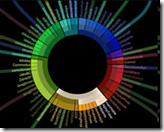
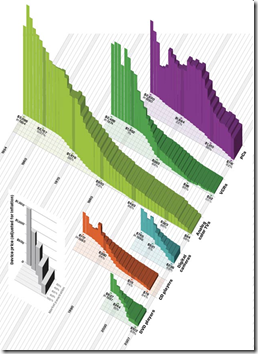
and while we’re at it: 25+ Useful Infographics for Web Designers from the same blog. my two favorites below.
Different types of internet participants by age group:

Changing costs of living on the bleeding edge of technology:
Financial Reform
In: Finance Global Economy Source: FT Source: NYT Source: Ritholtz Stock Market US Economy
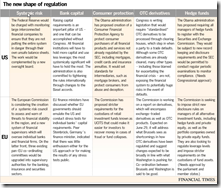
23 Jun 2009Summary of EU and US reforms. The related article is a very good read on the subject.
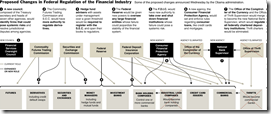
NYT’s version of just the USA (hat-tip to Ritholtz). Related article.
The State of Britain
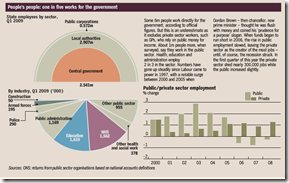
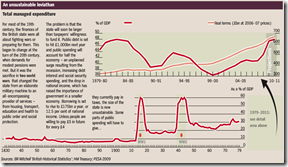
23 Jun 2009A series of six figures (two shown below) on the composition of British Government Expenditure.
Hurricanes
22 Jun 2009Two part interactive toy from AP. The first one takes you on a cool animated walk through the 5 point Saffir-Simpson Hurricane scale, simulating the amount of damage along the way. The second maps out the path and category of every hurricane from 1851-2009.


ooops: Missed one, though it’s separate from the others… It includes a map of the empty homes in Florida (from foreclosures, amongst other causes) and animates the types of different types of damage a hurricane can cause (click along the top):

Non-Caveman Comfort Costs
In: Humor Innovative
22 Jun 2009A completely arbitrary list of modern comforts, showing how cheap many things are that we take for granted. (noticeably absent: heating, which has obviously done nothing but go up in price)

Yet Another Recovery Index
In: Bailout Employment Finance Housing Updated regularly US Economy
22 Jun 2009This one from Kiplinger. Pretty standard stuff – a color-coded summary and charts for each of six components. Uses a pretty weak (but easy to understand) recovery threshold: “When at least three of the six indicators go fully positive — with a check mark from us — it’s more than likely that the recession has ended.” The "watch for" section of each indicator are interesting.


Weird Green Shoots
22 Jun 2009Not really a graphic (though there is a slideshow version), Kiplinger lists 10 Quirky Economic Indicators, from movie attendance to alligators and mosquitoes.

States Facing Budget Crisis
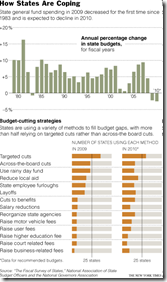
22 Jun 2009The article is more interesting than the graphic.
Unemployment Reform
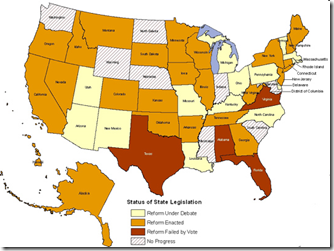
22 Jun 2009Many states are modifying their unemployment benefit laws, some in connection to the recession and some to take advantage of federal stimulus money. Related NYT blog post.
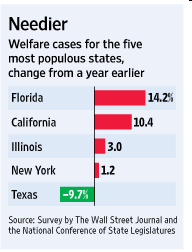
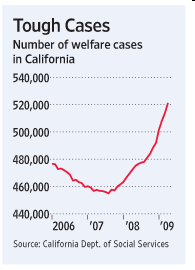
Welfare Rolls Swelling
22 Jun 2009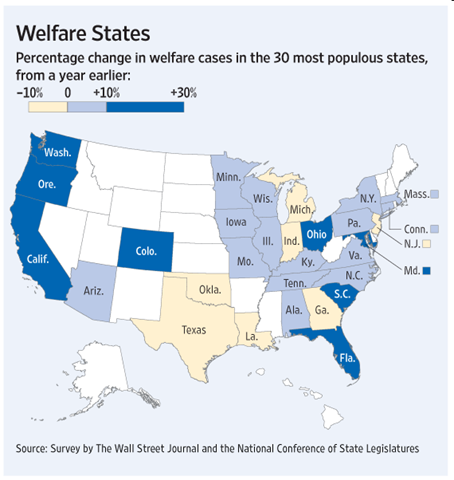
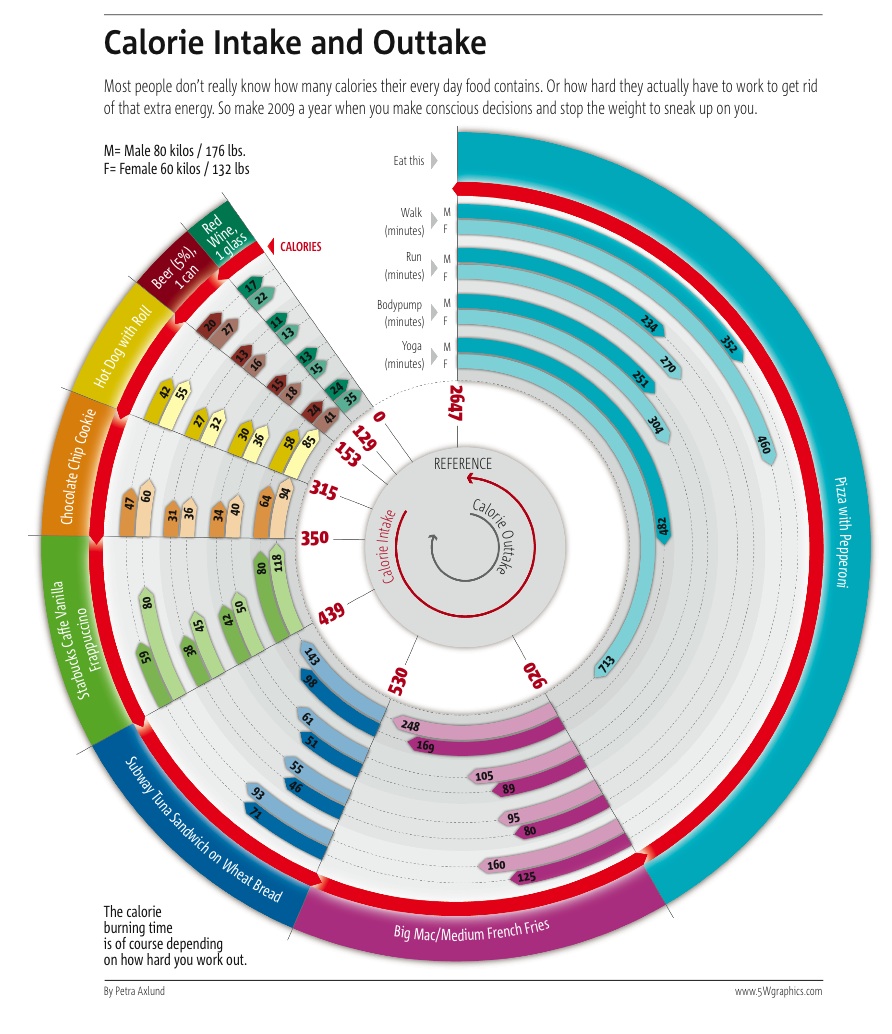
Food In, Calories Out
In: Food Innovative
22 Jun 2009Colorful presentation of how much exercise you have to do after eating certain foods. Spotted by DataViz.


What is Chart Porn?
An addictive collection of beautiful charts, graphs, maps, and interactive data visualization toys -- on topics from around the world.
Categories
- Bailout (118)
- Chartporn Related (3)
- Commentary (21)
- Culture (669)
- Emerging Markets (66)
- Employment (245)
- Environment/weather (133)
- Finance (298)
- Food (92)
- Global Economy (373)
- Graphic Design (bad) (26)
- Graphic Design (general) (183)
- Graphic Tools (23)
- History (158)
- Housing (162)
- Humor (204)
- Innovative (183)
- Interactive (545)
- Internet/tech (97)
- Maps (578)
- News Media (34)
- Politics (329)
- Reference (97)
- Science (331)
- Source: Economist (101)
- Source: FT (92)
- Source: NYT (147)
- Source: Ritholtz (76)
- Source: USA Today (27)
- Source: Washington Post (90)
- Source: WSJ (135)
- Sports (58)
- Stock Market (74)
- Uncategorized (2)
- Updated regularly (76)
- US Economy (553)
- Video (22)
- Aram Korevaar: This chart is now being used as a projection in which countries such as China see themselves as in a [...]
- David: Welcome back Chart Porn! [...]
- J S: Thanks for the great story. Miss reading this blog. Hope to see you more active again. [...]
- jake: I lived in a DC row house for 6 years, and I'm writing this comment from my tiny 1 bedroom apartment [...]
- ronny pettersen: Hilarious and unfortunately accurate... ;-) [...]