
Archive for May, 2009
New York Foreclosures
17 May 2009Very detailed interactive map of NY area foreclosures – over time, zoom in, even just type in an address. Related article. (Hat tip to Ritholtz for the find)
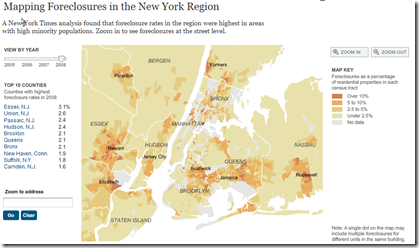
Chart Chooser
15 May 2009Interactive aid for picking the right chart, from Juice Analytics.

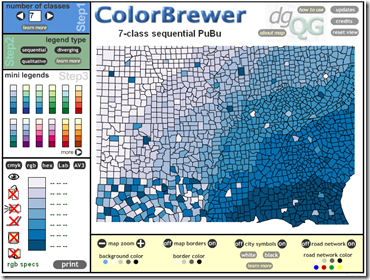
Colors
15 May 2009Picking colors for visualizations is always a tough chore. Cindy Brewer’s ColorBrewer is a helpful tool. Don’t forget to click on the “Learn More” button in each option group to see explanations of categorization and color theory.
European Economic Forecast Map (5/13/09 update)
In: Emerging Markets Global Economy Innovative Maps Source: FT Updated regularly
15 May 2009Click on the timeline at the top to view past versions. Roll over country names to see real GDP growth 2007-10.

Bad Time to Graduate
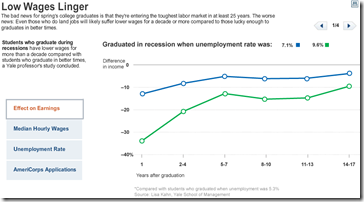
15 May 2009“The bad news for spring’s college graduates is that they’re entering the toughest labor market in at least 25 years. The worse news: Even those who do land jobs will likely suffer lower wages for a decade or more.” Related article. Tab through related stats in the below graphic:
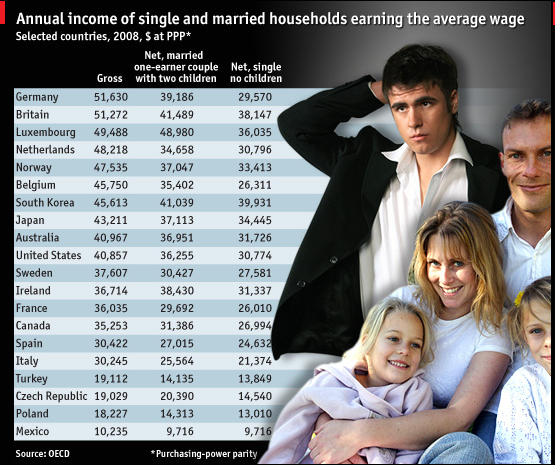
Global Breeding Incentives
14 May 2009In all but one of 30 OECD countries, a married one-earner couple with two children takes home more money than a single person with no children on the same average annual salary. (from Economist)
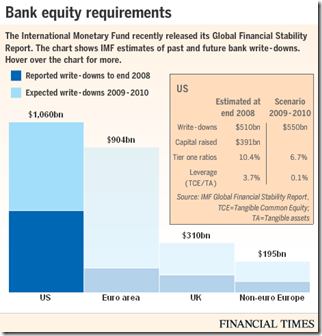
Writedown Estimates (again)
In: Bailout Finance Global Economy Interactive Source: FT US Economy
14 May 2009As we noted a couple weeks ago, the IMF released estimates of bank writedowns past and future in this years GFSR. Below is today’s FT interactive graphic of the same info (the total is $4 trillion if you were wondering).
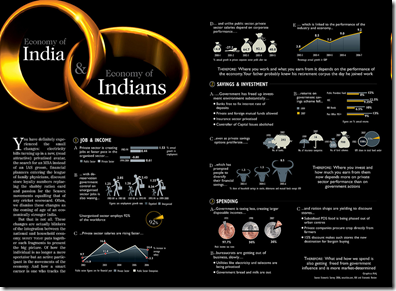
Indian Economy
14 May 2009A good example of combining data, graphics, and an economic story.
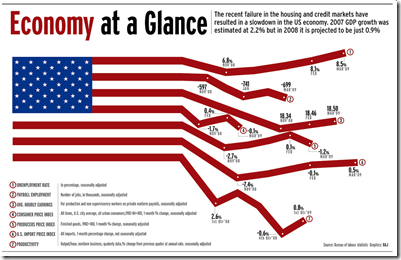
Economic Flag
In: Innovative US Economy
14 May 2009The title is a little odd considering they include March 09 data, but it’s still a clever presentation. Hmmm. actually now that I look at it the lines aren’t moving proportionally, which means this is mostly gimmickry. Too bad.
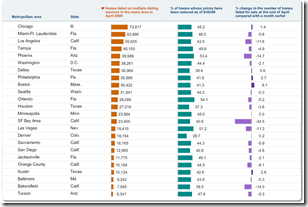
Housing Listings (April)
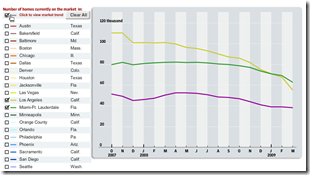
13 May 2009Housing inventory sortable by city, current (April) and over last 18 months (ZipReality data). As usual, the data is clouded by foreclosures. Related WSJ article.
(more) OECD Composite Leading Indicators
12 May 2009I just noticed that the front page FT graphics I posted earlier today were actually just chopped versions of figures from the OECD’s press release. You also might notice that this analysis covers six non-OECD countries (Brazil, China, India, Indonesia, Russian Federation and South Africa). Here’s the Raw data if you want to dig.


OECD Business Cycle Clock
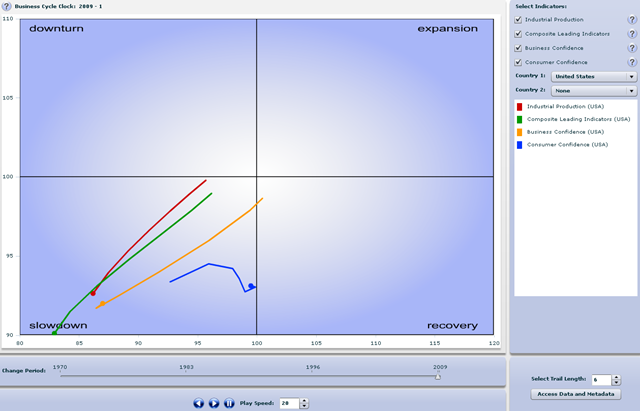
12 May 2009The OECD has a nifty toy, the Business Cycle Clock, where you can construct animations of business cycles for different countries. The example below shows USA Industrial Production, Business Confidence, Consumer Confidence, and a Composite Leading Indicator – the arrow heads show March 09 and the tails the previous periods. The four quadrants show downturn/slowdown/expansion/recovery. You can even throw up two different countries to compare performance. I wish there was a way to export the animations.
OECD Composite Leading Indicators
12 May 2009“OECD composite leading indicators (CLIs) for March 2009 continue to point to a strong slowdown in the OECD. However France, Italy and the United Kingdom are showing tentative signs of, at least, a pause in the economic slowdown. Weak though these signals are, they are present in the majority of the CLI component series for these countries. In other major OECD economies the CLIs continue to point to deterioration in the business cycle, but at a decreasing rate. However, with the exception of China, where signs of a pause have also emerged, major non-OECD economies still face deteriorating conditions.”
Related FT article.
OECD press release and data website (will be updated regularly)

Google News Treemap
11 May 2009I could have sworn I posted this before, but it took Kelso’s post to remind me that I hadn’t. It’s a very nice interactive google-news aggregator:

Data Visualization Sites
11 May 2009Nathan over at FlowingData recently posted a very nice comprehensive list of data visualization sites, blogs, and resources. Obviously a lot of content log-rolling goes on between these sites, but each has it’s own niche and spin on things.



What is Chart Porn?
An addictive collection of beautiful charts, graphs, maps, and interactive data visualization toys -- on topics from around the world.
Categories
- Bailout (118)
- Chartporn Related (3)
- Commentary (21)
- Culture (669)
- Emerging Markets (66)
- Employment (245)
- Environment/weather (133)
- Finance (298)
- Food (92)
- Global Economy (373)
- Graphic Design (bad) (26)
- Graphic Design (general) (183)
- Graphic Tools (23)
- History (158)
- Housing (162)
- Humor (204)
- Innovative (183)
- Interactive (545)
- Internet/tech (97)
- Maps (578)
- News Media (34)
- Politics (329)
- Reference (97)
- Science (331)
- Source: Economist (101)
- Source: FT (92)
- Source: NYT (147)
- Source: Ritholtz (76)
- Source: USA Today (27)
- Source: Washington Post (90)
- Source: WSJ (135)
- Sports (58)
- Stock Market (74)
- Uncategorized (2)
- Updated regularly (76)
- US Economy (553)
- Video (22)
- Aram Korevaar: This chart is now being used as a projection in which countries such as China see themselves as in a [...]
- David: Welcome back Chart Porn! [...]
- J S: Thanks for the great story. Miss reading this blog. Hope to see you more active again. [...]
- jake: I lived in a DC row house for 6 years, and I'm writing this comment from my tiny 1 bedroom apartment [...]
- ronny pettersen: Hilarious and unfortunately accurate... ;-) [...]